
How we work
No surprises.
That is the whole method.
Six steps from the first phone call to the magnet sweep, and you see every one of them. Photographs of your own roof, an itemised estimate, and a crew that leaves your property the way it found it.
Six steps
Call, to clean-up.
You call, or you ask for the inspection
One phone number, and it is answered by someone who works on roofs. Emergencies get handled the same day — around the clock, not just business hours.
We get on your roof, free
Not a look from the driveway. We walk the roof, check the flashing, the penetrations, the ventilation and the gutters, and go into the attic where we can.
You get photos and a straight answer
Pictures of your own roof and a plain-English read on what shape it is in — including the times the answer is that it is fine and you should call us in four years.
A written estimate, itemised
The whole system in writing: tear-off, decking allowance, membrane, underlayment, shingle, flashing, ventilation, cleanup. Nothing vague, nothing to argue about later.
Scheduled, and your property protected
A real date, and a crew that tarps the landscaping, protects the driveway and keeps the site tight. Your house is never left open overnight.
Final walk and a magnet sweep
We walk it with you, hand over the paperwork and warranty registration, and run a magnet over the whole perimeter until it stops picking up nails.
The roof system
Seven layers.
All seven, every time.
This is what “a new roof” means when we say it. Leave any one of these out and the roof still looks finished from the street — for about three years.
Step one to step six
The whole process,
in two frames.
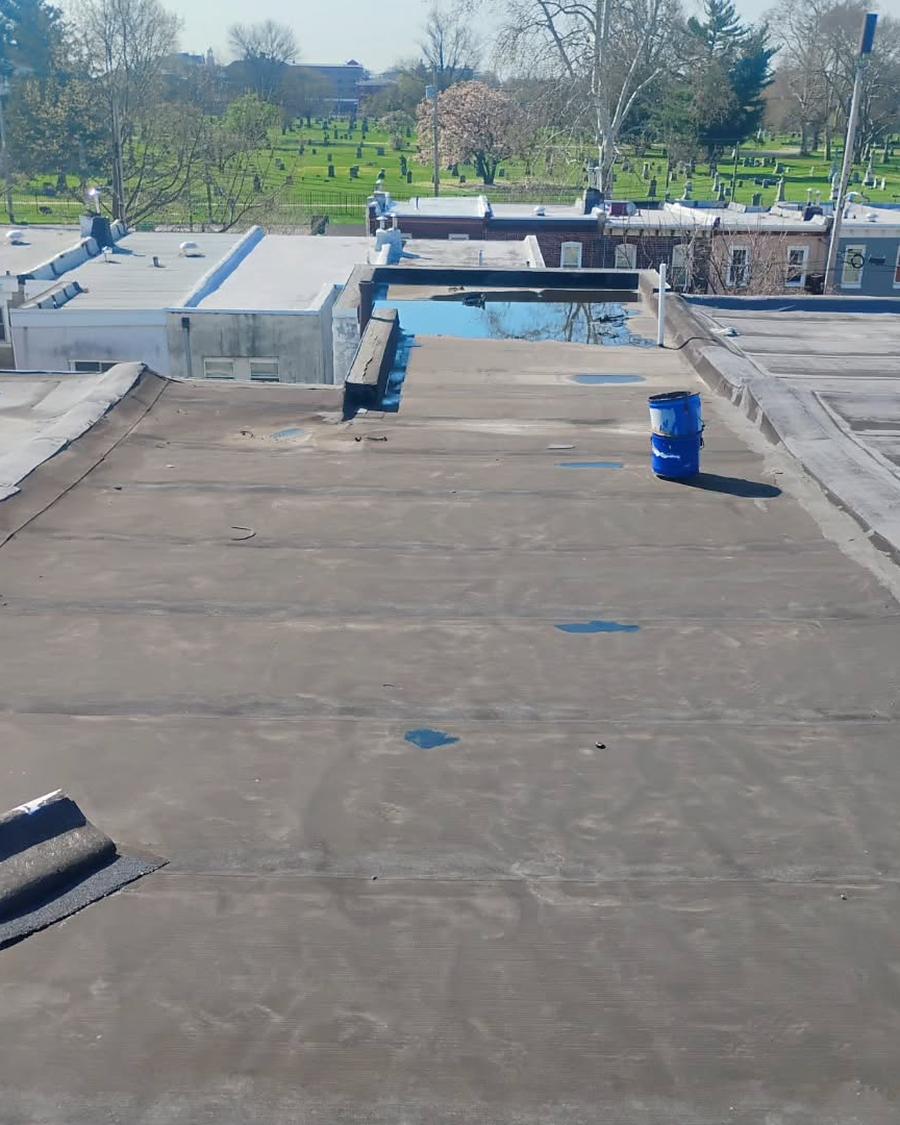
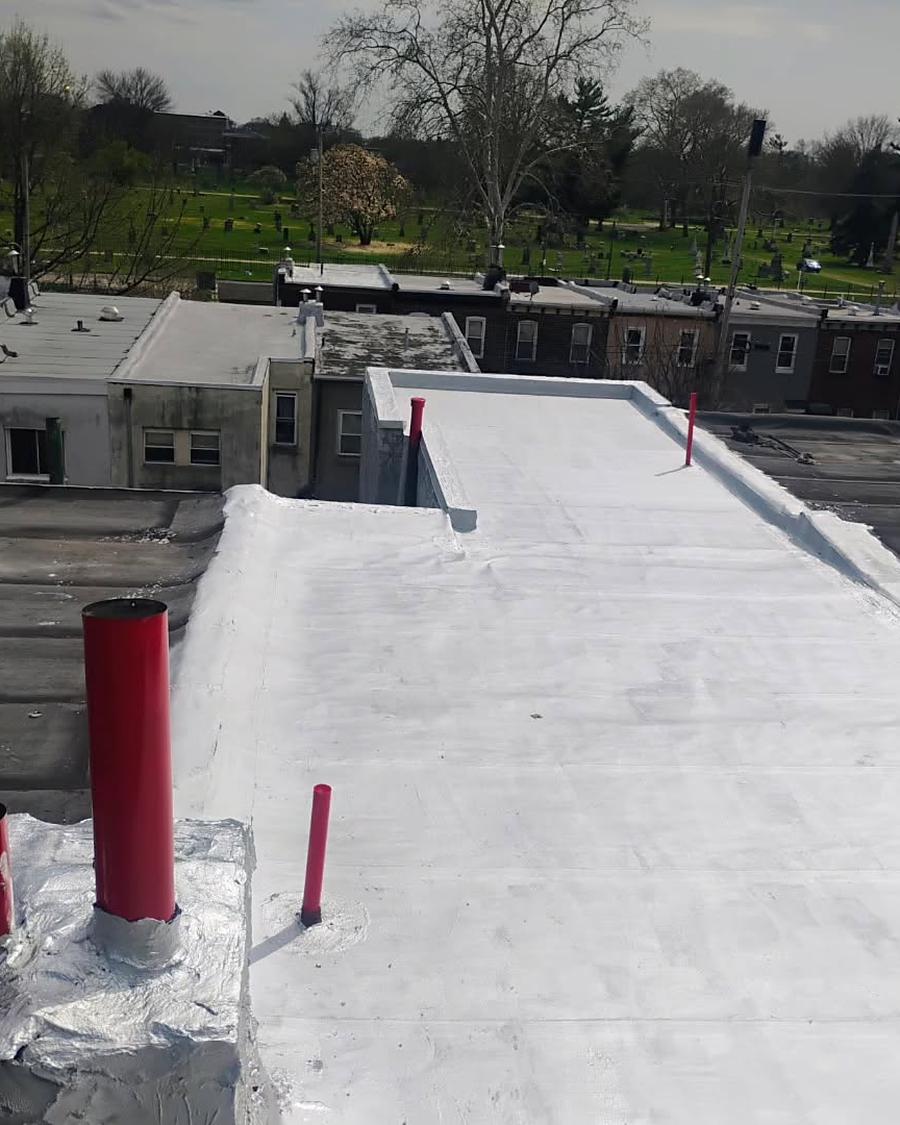
This is what the six steps above actually produce. Left is the free inspection — ponding water and a surface that had given up, none of it visible from the street. Right is the final walk. Same roof, same standing position, and the photographs of every stage in between went to the customer's phone as we went.
Pricing
What actually changes
the number.
Nobody can price a roof off a phone call, and anybody who does is guessing high enough to be safe. Here is what we are looking at when we walk it.
Size, pitch and access
Square footage is the obvious one. Pitch matters more than people expect — a steep roof is slower, needs staging and is simply harder to work. On a city row, so is getting material up there at all.
How many layers are coming off
A single layer of shingle is one thing. Two or three layers, or a layer over old cedar shake, is a great deal more tear-off, more dumpster and more labour.
How much flashing there is
Chimneys, dormers, skylights, wall tie-ins and valleys are where the labour and the leaks both live. A plain rectangle of roof and a cut-up roof of the same square footage are not the same job.
What is under the shingles
We carry a decking allowance and we show it to you as a line. Once the old roof is off we know exactly how many sheets are bad, and you get charged for the ones we actually replace.
Ventilation and code work
Ridge vent, intake at the soffit and the ice & water shield the code requires at the eaves. Some estimates leave these off to look cheaper. Ours do not.
Disposal and protection
Dumpster, haul-off, tarping the landscaping, protecting the driveway and the magnet sweep at the end. It is real cost and it is on the estimate, not a surprise.
Warranties
Three different things,
and the gap between them.
Almost every roofing dispute lives in the space between these. Ask any contractor to put in writing which ones you are getting.
- Manufacturer warranty — covers the shingle itself against defects. It does not cover installation.
- Workmanship warranty — covers the install, and it is only as good as the company standing behind it.
- System warranty — the stronger manufacturer coverage available when the whole system is theirs, installed to their spec.
We will tell you exactly which applies to your job, in writing, before you sign anything.
Free estimate
Free inspection. Written estimate. No pressure.
Tell us what you are looking at and we will come and look at it — and we will tell you honestly what it needs, including the times the answer is nothing yet.