Three generations of Philadelphia roofers — residential only 24/7 Emergency Blog (215) 303-0319

Material guide

Types of Roofing

Nine roof types you will actually see on a Philadelphia house. Each one is drawn here — the courses, the seams, the profile — so you can look at the picture, then look at your own roof, and know what you are dealing with before anybody quotes you.

Pitched roofs

5 types
Most common $$$$ Drawn specimen — swap for a job photo

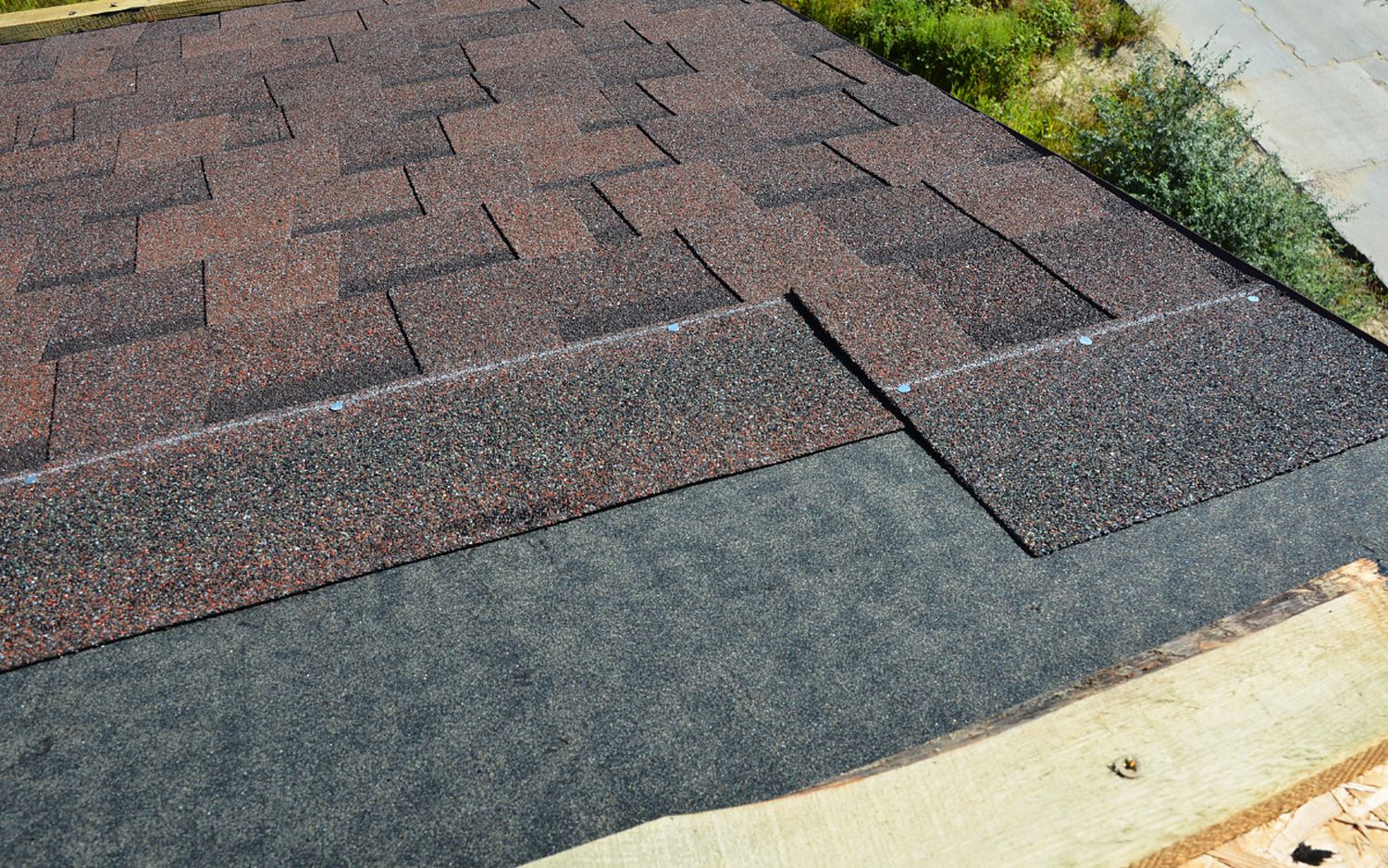
Architectural Asphalt Shingles

Dimensional · laminated · GAF Timberline HDZ

Two shingle layers laminated together, so the tabs throw a real shadow and the roof reads like depth instead of a flat sheet. This is what the overwhelming majority of Philadelphia pitched roofs get today, and it is what we install by default.

25–30+ yearsLifespanNeeds 4:12 pitch or steeperPitch

Best forAlmost any pitched residential roof — rows, twins, singles, dormers and additions.

Strengths

  • Heavy shadow line, looks like a roof and not a mat
  • Wind ratings up into the 110–130 mph range when installed to spec
  • Long manufacturer warranties on the system, not just the shingle
  • Enormous colour range, easy to match a block

Trade-offs

  • Costs more than 3-tab up front
  • Heavier — worth a look at the deck on very old houses

What MG doesWhat we install as standard. GAF systems, full tear-off, ice & water shield, synthetic underlayment and ridge ventilation.

Budget $$$$ Drawn specimen — swap for a job photo

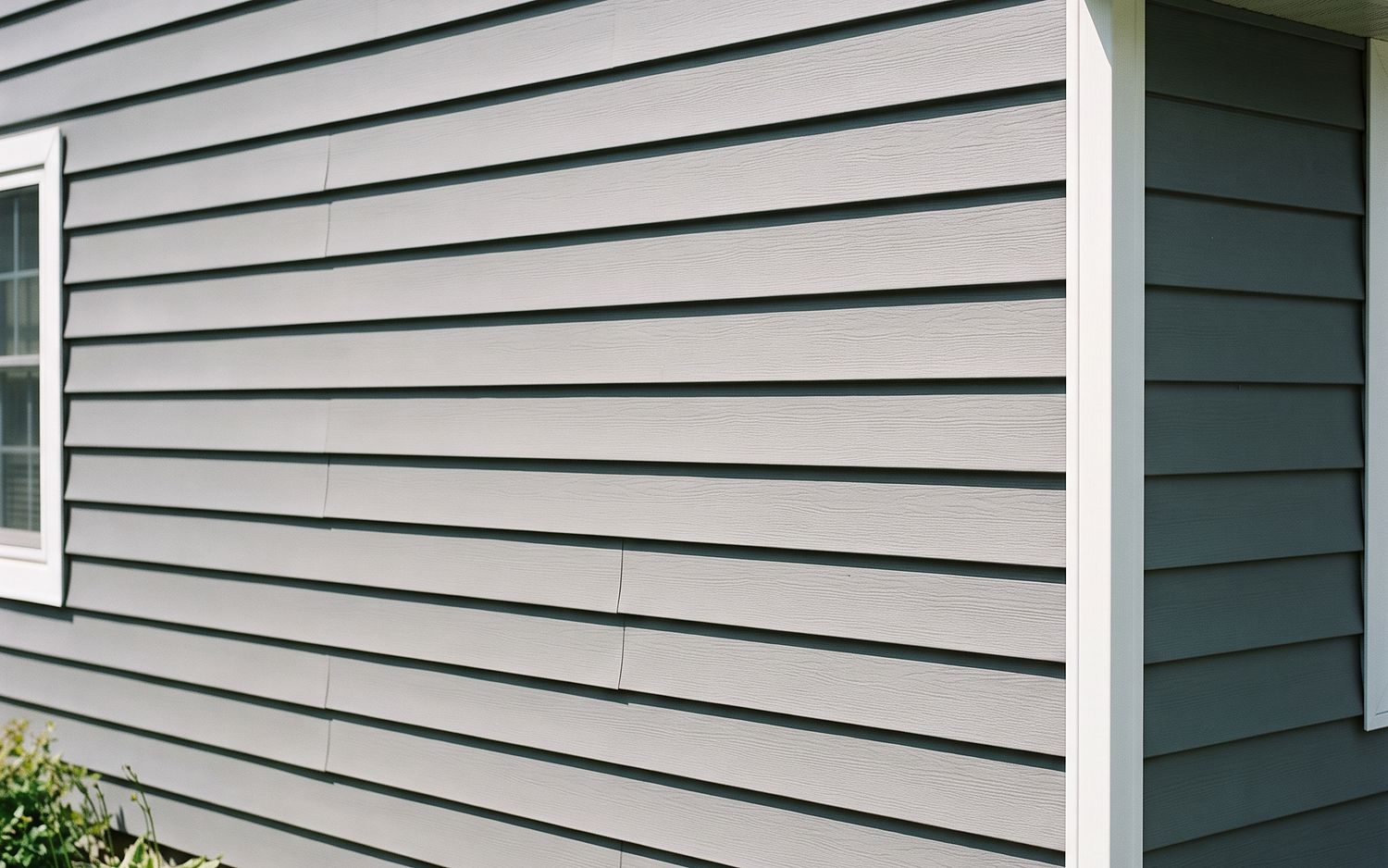
3-Tab Asphalt Shingles

Strip shingle · the flat one

A single-layer shingle cut into three even tabs, so the roof reads flat and uniform. It was the standard for decades and you can still spot it on plenty of city blocks. Today it is mostly a price decision.

15–20 yearsLifespanNeeds 4:12 pitch or steeperPitch

Best forTight budgets, rentals, garages and outbuildings, or matching an existing 3-tab roof.

Strengths

  • Cheapest asphalt option
  • Light — easy on an old deck
  • Simple to repair and match

Trade-offs

  • Shortest life of any shingle worth putting on a house
  • Lower wind rating — tabs lift and tear
  • Flat, dated look; most manufacturers are winding the category down

What MG doesWe will install it if that is genuinely what you want. We will also tell you the price gap to architectural is usually smaller than people expect.

Premium $$$$ Drawn specimen — swap for a job photo

Designer & Luxury Shingles

GAF Grand Sequoia · Camelot · Slateline

Heavyweight asphalt cut and laminated to imitate slate or hand-split cedar shake. From the street it reads as the real thing at a fraction of the weight and a fraction of the cost, which matters on the stone twins and Victorians around Germantown, Mount Airy and Chestnut Hill.

30–50 yearsLifespanNeeds 4:12 pitch or steeperPitch

Best forHouses where the roof is part of the architecture — steep slopes, big visible planes, historic-looking blocks.

Strengths

  • Genuinely looks like slate or shake from the ground
  • Thickest asphalt shingle made, strongest wind ratings
  • No structural work needed the way real slate would

Trade-offs

  • The most expensive asphalt option
  • Heavier again — the deck gets a proper look first

What MG doesYes. If you want the slate or shake look without re-engineering the roof structure, this is the honest way to get it.

Philadelphia classic $$$$ Drawn specimen — swap for a job photo

Slate & Synthetic Slate

Natural slate · composite slate

Real quarried slate is all over the older parts of this city and it outlives everything else on this page — often outliving the nails and the flashing holding it on, which is usually what actually fails. Synthetic slate is a moulded composite that gets you the look and a fraction of the weight.

75–150 years (natural)LifespanSteep slopes onlyPitch

Best forHistoric homes that already have slate, and anyone who wants a roof measured in generations.

Strengths

  • Natural slate is effectively permanent
  • Fireproof, and unmistakable from the street
  • Synthetic slate weighs a fraction and installs like a shingle

Trade-offs

  • Natural slate is heavy and expensive, and repairs are specialist work
  • Individual slates go brittle with age
  • Not every roof structure will carry it

What MG doesStraight answer: original natural slate restoration is its own trade. Come to us for synthetic slate, for designer shingles that read as slate, and for the flashing, gutter and capping work around a slate roof — and we will tell you plainly when a job belongs with a slate specialist.

Long life $$$$ Drawn specimen — swap for a job photo

Standing Seam Metal

Vertical panel metal · concealed fastener

Long vertical panels locked together at raised seams, with the fasteners hidden underneath. Nothing penetrates the weather surface, which is why it works down to much lower pitches than a shingle and why it lasts as long as it does.

40–60 yearsLifespanWorks on low slopes tooPitch

Best forPorch and bay roofs, additions, low-slope sections tied into a shingle roof, and whole roofs where longevity is the point.

Strengths

  • Longest-lived option short of real slate
  • Sheds snow and rain hard, excellent in wind
  • Reflective — measurably cooler attic in August
  • Handles pitches asphalt shingles cannot

Trade-offs

  • High up-front cost
  • Rain is audible on an uninsulated roof
  • Panel work is unforgiving; bad flashing shows immediately

What MG doesWe do metal on porch roofs, bays, dormers and low-slope tie-ins — the places in this city where it earns its keep. Ask us on the inspection.

Flat & low-slope roofs

4 types
The rowhome roof $$$$ Drawn specimen — swap for a job photo

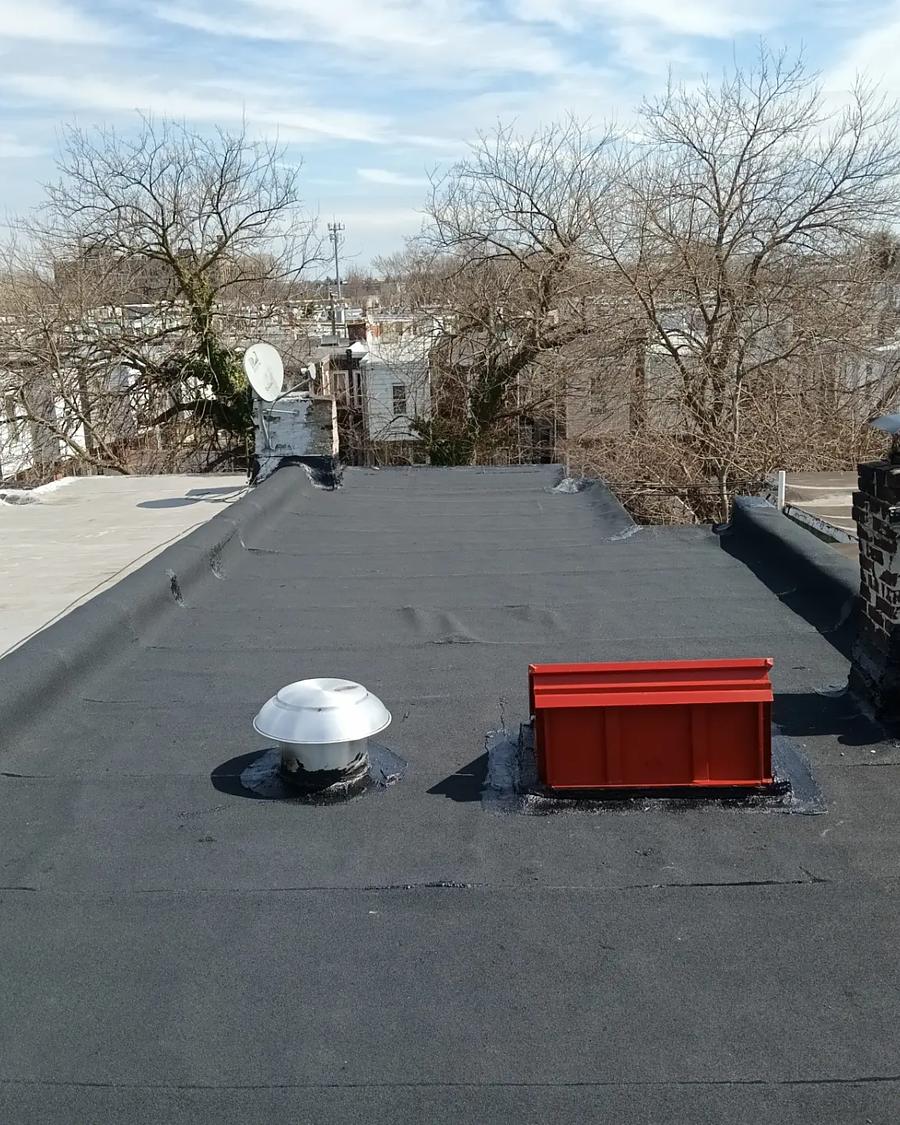
EPDM Rubber Membrane

Rubber roof · single-ply

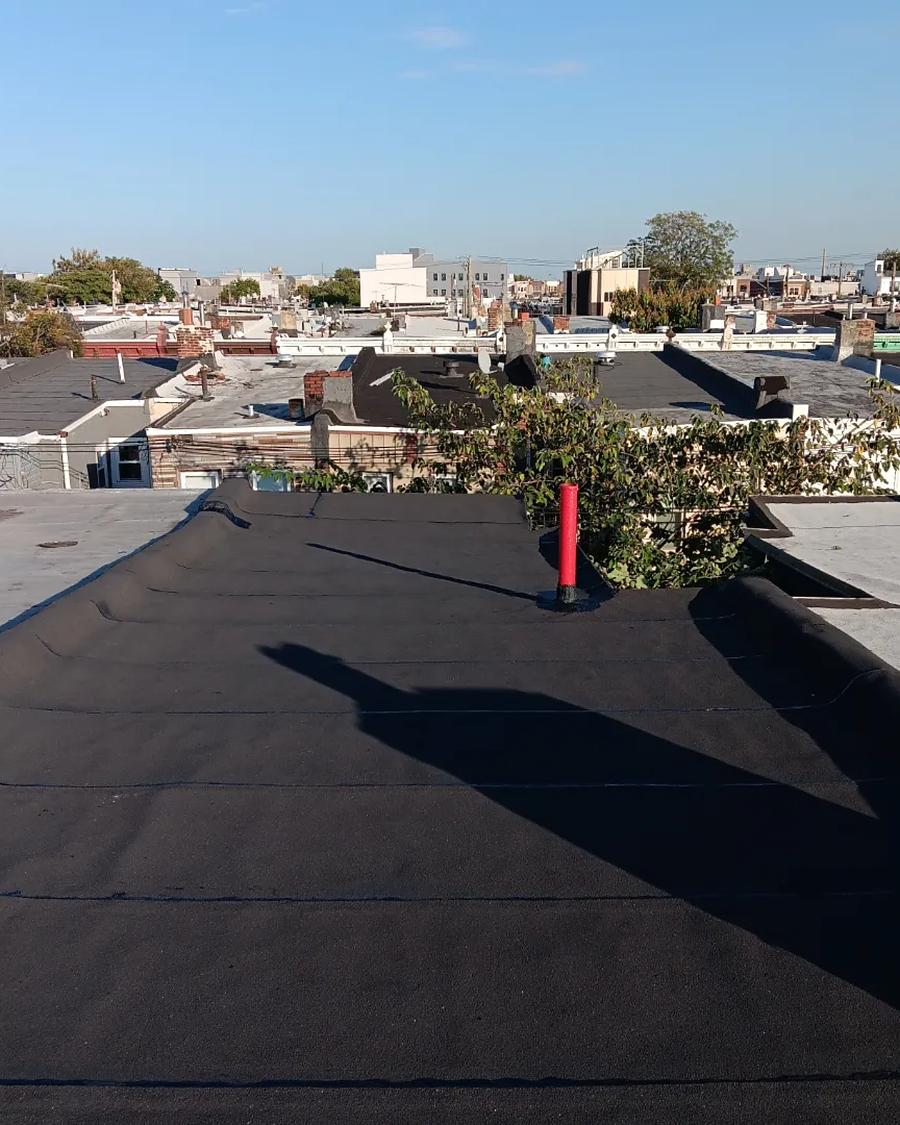
A single sheet of synthetic rubber rolled out over insulation board and either fully adhered or mechanically fastened, with the joints taped and rolled. It is the default flat roof in Philadelphia for good reason — it handles this city's freeze-and-bake cycle better than almost anything else and it can be repaired for decades.

20–30 yearsLifespanFlat and low-slope onlyPitch

Best forRow and twin roofs, additions, porch roofs, anything under about a 2:12 pitch.

Strengths

  • Very tolerant of Philadelphia temperature swings
  • Repairable and patchable more or less indefinitely
  • No open flame on your roof during installation
  • Roof-deck friendly with proper walk pads

Trade-offs

  • Black absorbs heat unless you spec a white membrane or coat it
  • Only as good as its seams and terminations
  • Punctures from foot traffic and dropped tools

What MG doesOur bread and butter on flat roofs. Full tear-off, wet insulation out, new board, seams cleaned, primed, taped and rolled, terminations barred and sealed.

Cool roof $$$$ Drawn specimen — swap for a job photo

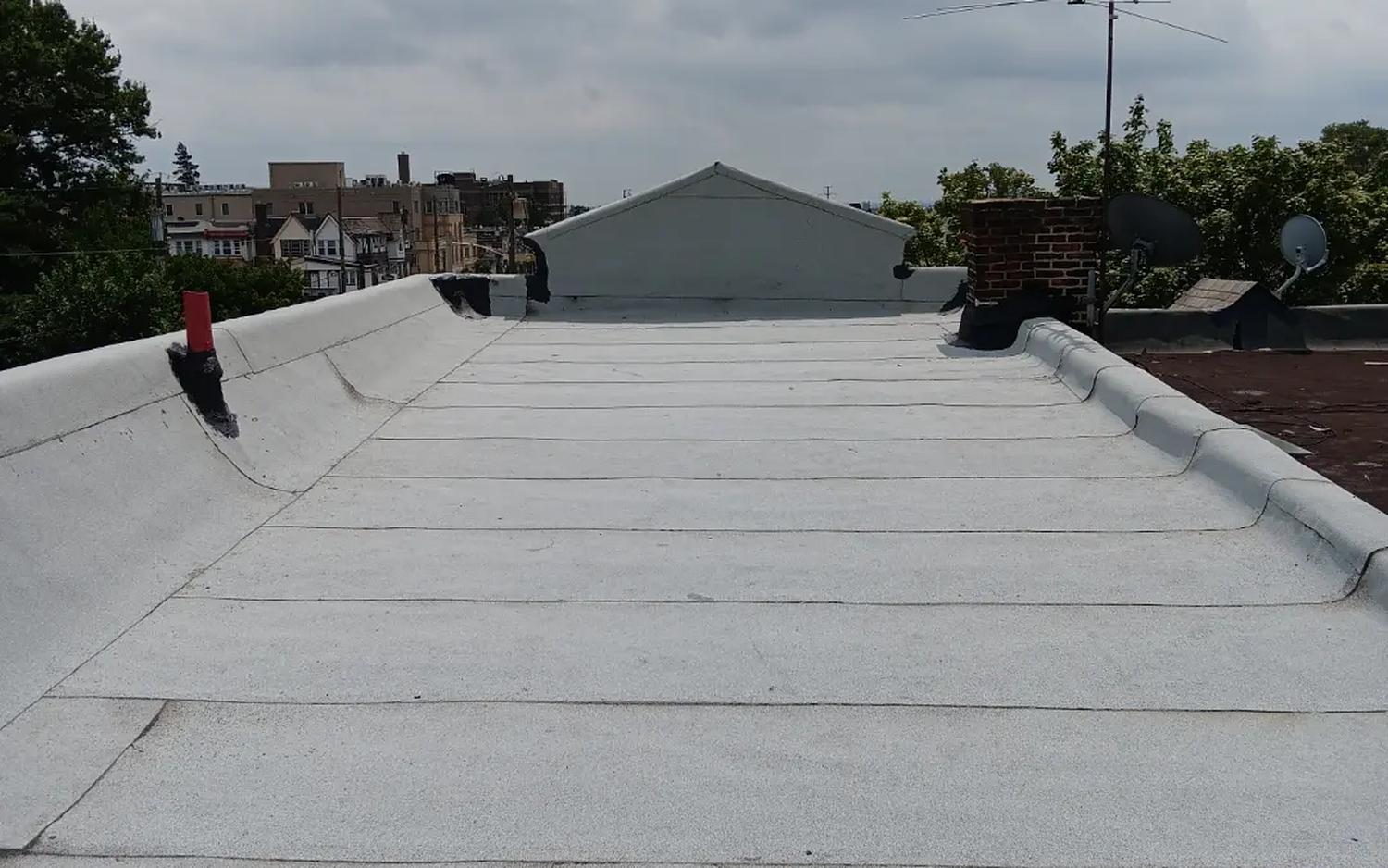
TPO & White Single-Ply

Thermoplastic membrane · cool roof

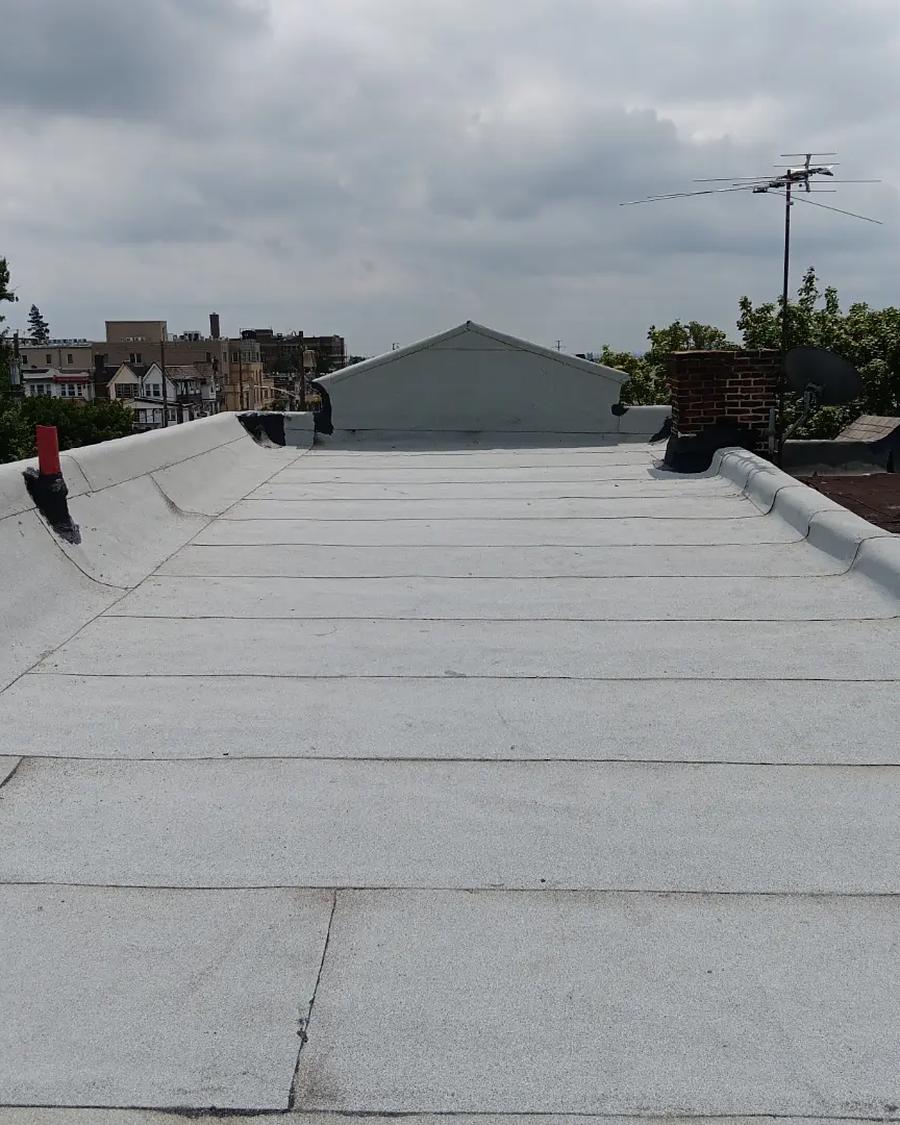
A white thermoplastic sheet whose seams are hot-air welded rather than taped, which makes a joint that is effectively part of the sheet. The white surface throws sunlight back off the roof instead of soaking it in.

20–30 yearsLifespanFlat and low-slope onlyPitch

Best forFlat roofs over living space — especially a top-floor bedroom that is unbearable in July.

Strengths

  • Reflective: a real, felt difference in top-floor summer temperature
  • Heat-welded seams are extremely strong
  • Lower cooling bills on an uninsulated top floor

Trade-offs

  • Shows dirt, which is cosmetic but people notice
  • Seam quality depends entirely on the welder and the operator

What MG doesYes — and worth asking about if your top floor bakes. The roof is coming off anyway; the white membrane is a small delta.

Traditional $$$$ Drawn specimen — swap for a job photo

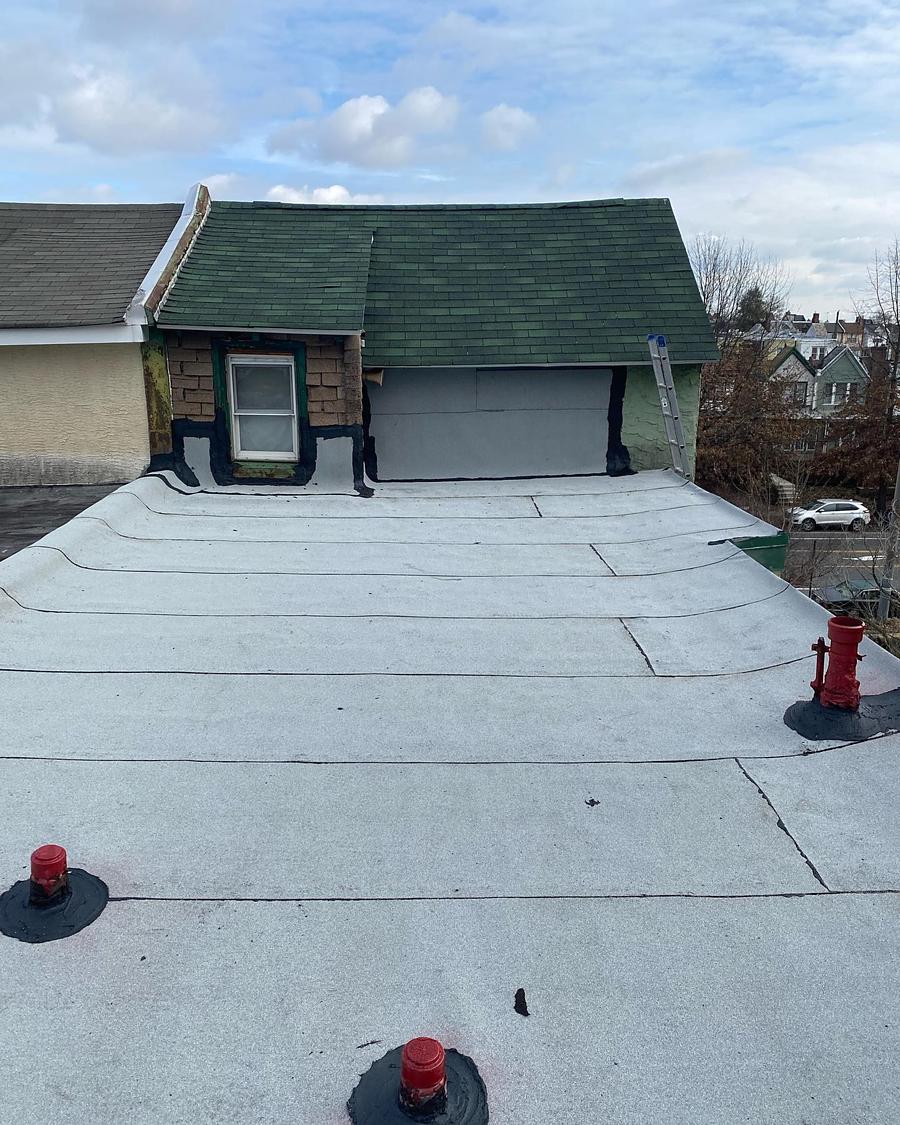
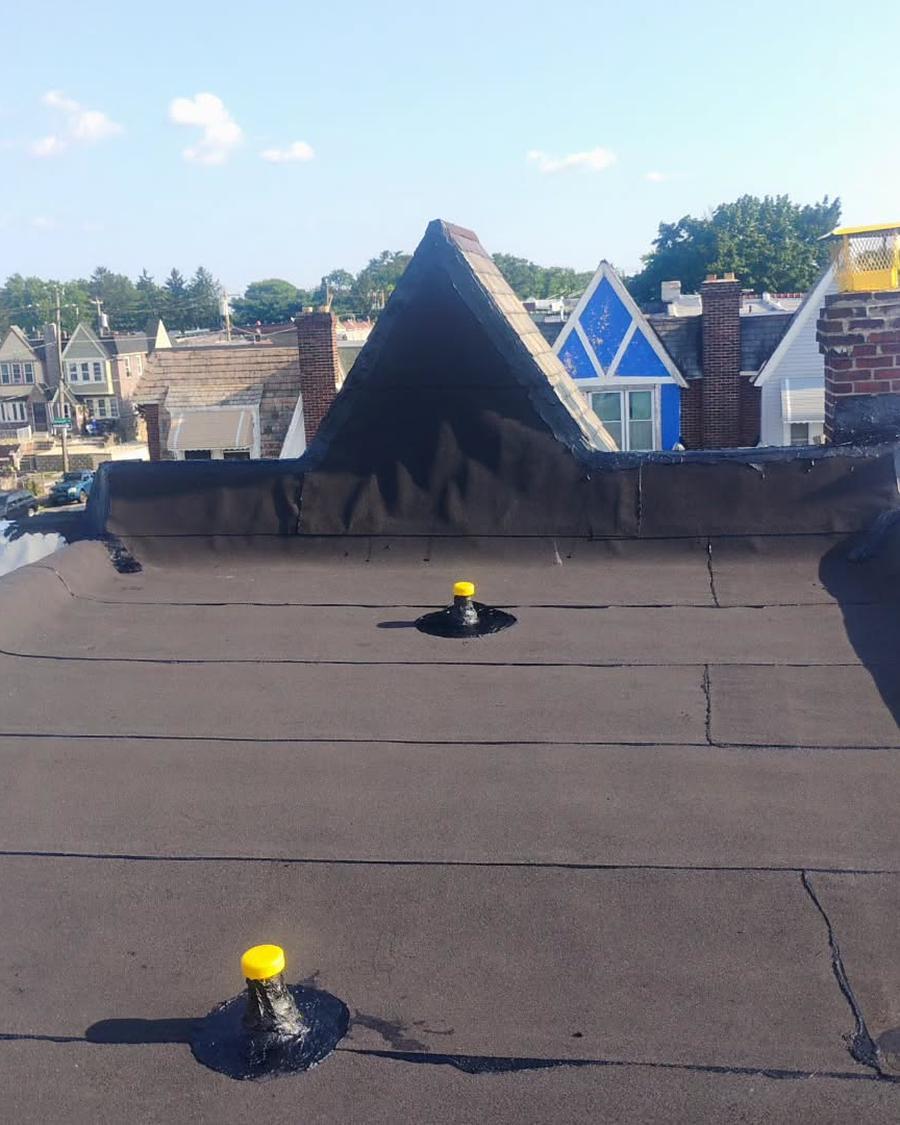
Modified Bitumen

Mod-bit · torch-down · rolled roofing

Asphalt reinforced with a polymer and rolled out in layers, with the seams either torched, hot-mopped or self-adhered. It is the descendant of the old built-up tar-and-gravel roof and there is a great deal of it in this city.

15–25 yearsLifespanFlat and low-slope onlyPitch

Best forMatching or repairing an existing mod-bit roof, and roofs that take real foot traffic.

Strengths

  • Tough underfoot — takes traffic better than single-ply
  • Multi-layer redundancy
  • Self-adhered versions need no flame at all

Trade-offs

  • Torch application near old wood and parapets carries real fire risk
  • Heavier and hotter than a white membrane
  • Seams and laps are the weak point as it ages

What MG doesWe work on it and we repair it. For a full flat-roof replacement we will usually steer you to rubber and explain why.

Restoration $$$$ Drawn specimen — swap for a job photo

Silicone & Elastomeric Coatings

Roof coating · roof restoration

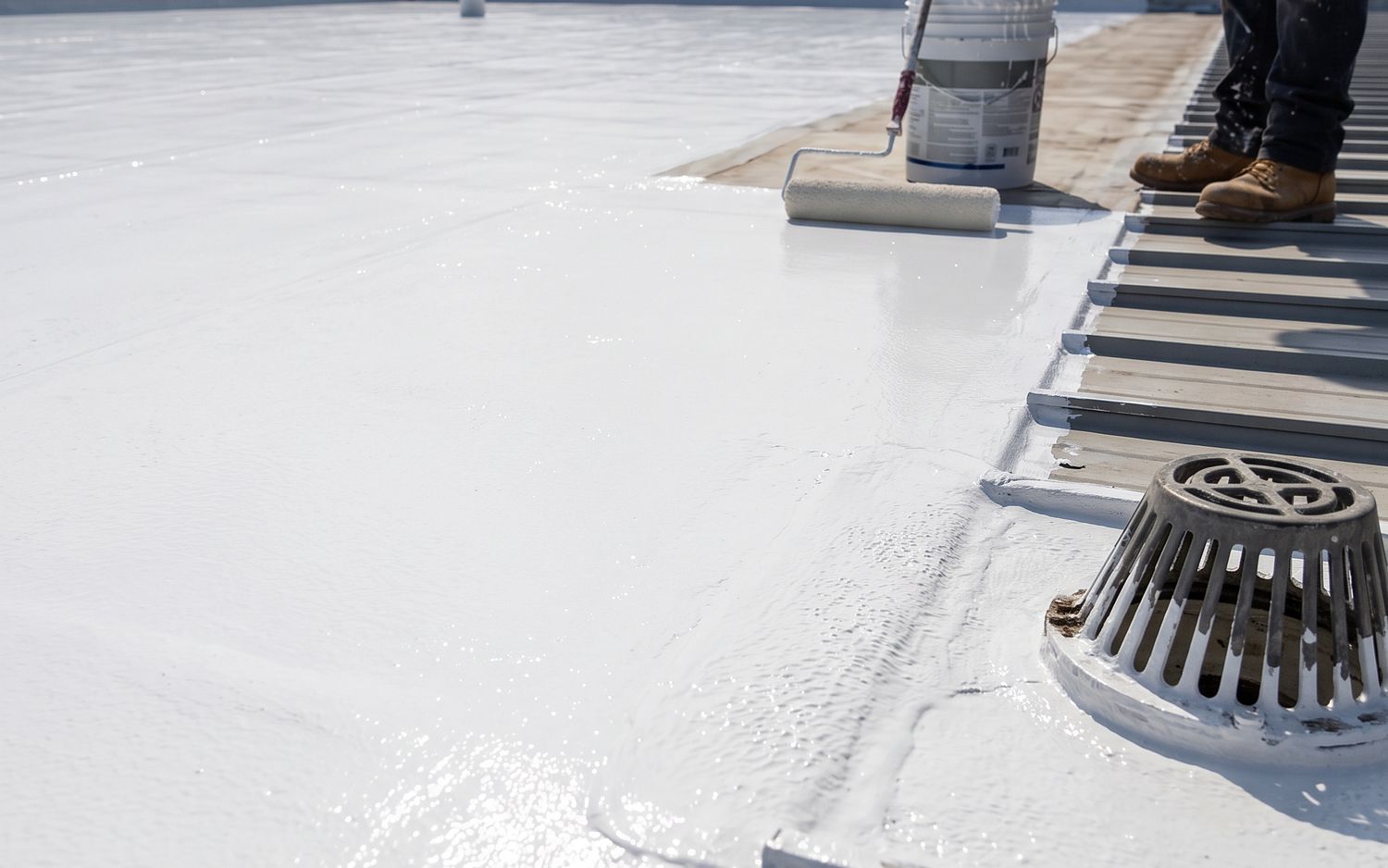
A liquid membrane rolled or sprayed over an existing flat roof to make a seamless, reflective skin with no joints in it at all. Done over the right roof it genuinely buys you years for a fraction of a replacement. Done over the wrong roof it is money set on fire.

10–20 years, renewableLifespanFlat and low-slope onlyPitch

Best forA structurally sound, dry flat roof with intact insulation that is getting tired at the seams.

Strengths

  • Far cheaper than replacement
  • Seamless — no joints to fail
  • Reflective
  • Recoatable, so the clock resets

Trade-offs

  • Useless over wet or saturated insulation — it seals the water in
  • Needs a clean, properly prepared surface or it peels
  • It is a restoration, not a new roof, and nobody should sell it as one

What MG doesWe will check for saturation before we ever quote a coating. If your insulation is wet, we will tell you it needs to come off — even though the coating would have been the easier sale.

Still not sure?

We will come and
look at it, free.

Choosing a material off a page is guesswork. Choosing it after somebody has been on your roof, photographed what is there and told you what your house actually needs is not. That part costs nothing.

Deck → membrane → underlayment → shingle → ridge. Every time.

Free inspection & estimate

No obligation. Tell us what you are looking at and we will come and look at it.

Demo form — it validates and redirects, but sends nothing. Point it at the client's CRM to go live.

Straight answers

Types of Roofing — FAQ

Two answers, and which one applies depends entirely on your roof's pitch. On anything sloped, architectural asphalt shingles, by a mile. On the flat and low-slope roofs that cover most of the city's rows and twins, EPDM rubber.
From the ground: if you can see individual tabs with deep shadow lines it is architectural; flat, even, uniform courses are 3-tab; a hard grey rectangle pattern with tone variation is slate. If you cannot see the roof at all from the street, it is almost certainly flat. Or call us and we will tell you for nothing.
It is legal in a lot of cases and we still will not do it. A layover buries every soft deck board and every failed flashing under a new roof, adds serious weight, and takes years off the shingle because it cannot shed heat properly.
Somewhat — a heavier laminated shingle has more asphalt and more granule and it does last longer. But the installation matters more than the shingle. A mid-range shingle installed correctly beats a premium one nailed high every single time.

Free estimate

Free inspection. Written estimate. No pressure.

Tell us what you are looking at and we will come and look at it — and we will tell you honestly what it needs, including the times the answer is nothing yet.

(215) 303-0319