Three generations of Philadelphia roofers — the city and the suburbs 24/7 Emergency Blog (215) 303-0319

Material guide

Types of Gutters

Every gutter profile on the houses in this city, drawn in cross-section — because the profile is the whole difference between these products, and a photograph of a gutter from the street tells you nothing at all.

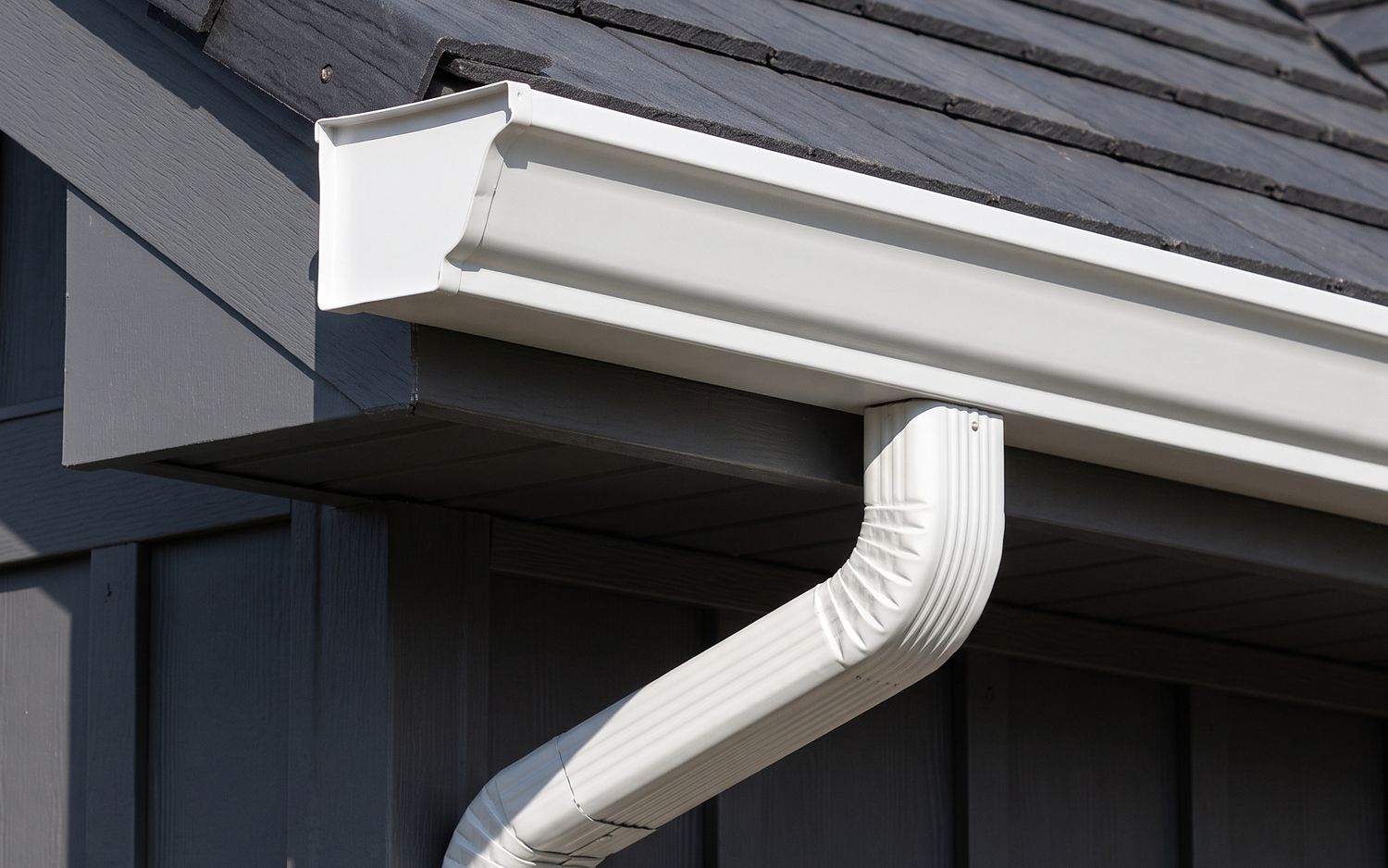
Five-inch K-style seamless aluminium gutter on a fascia, ogee front profile Standard $$$$

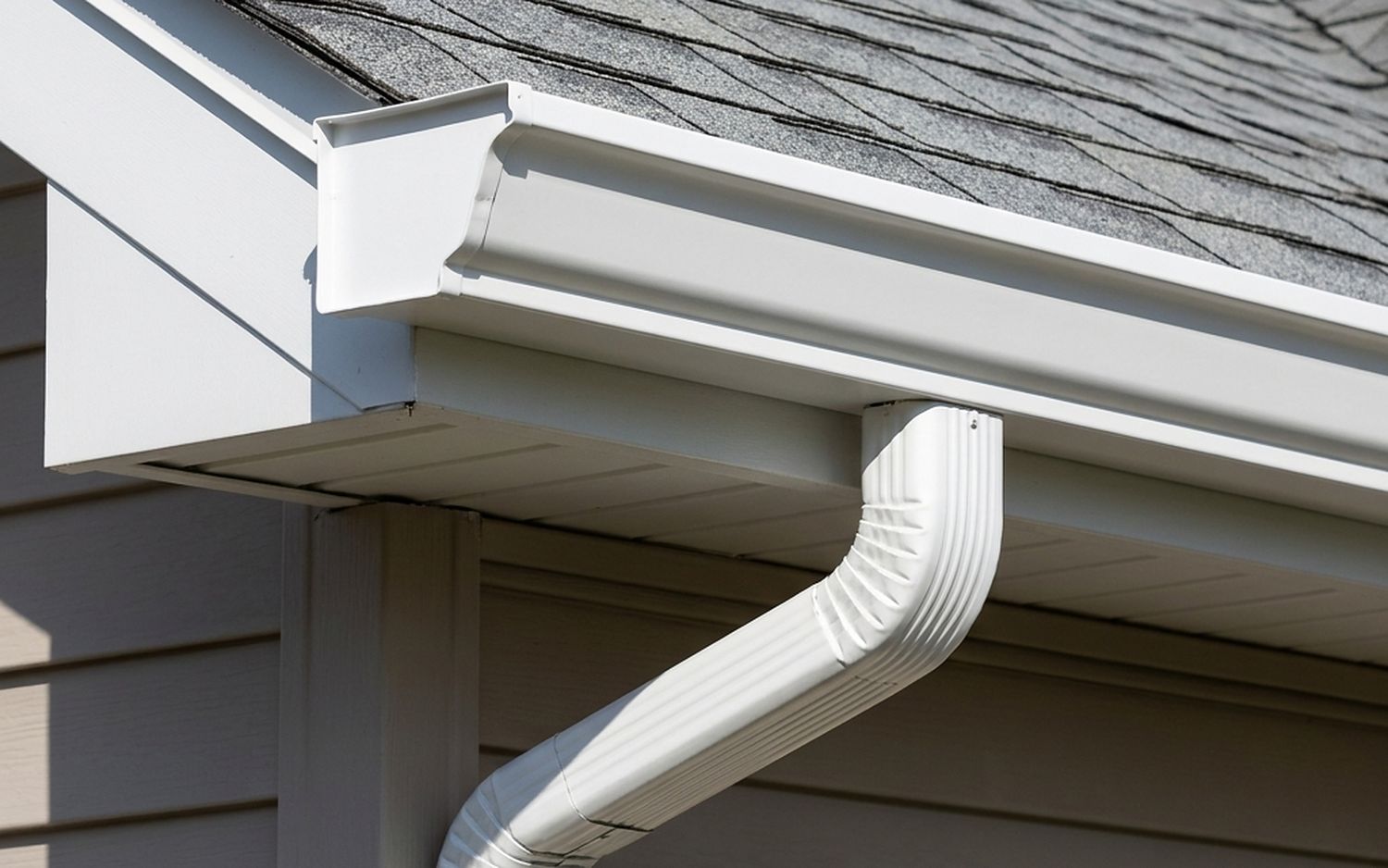
5″ K-Style Seamless Aluminum

Ogee profile · the standard gutter

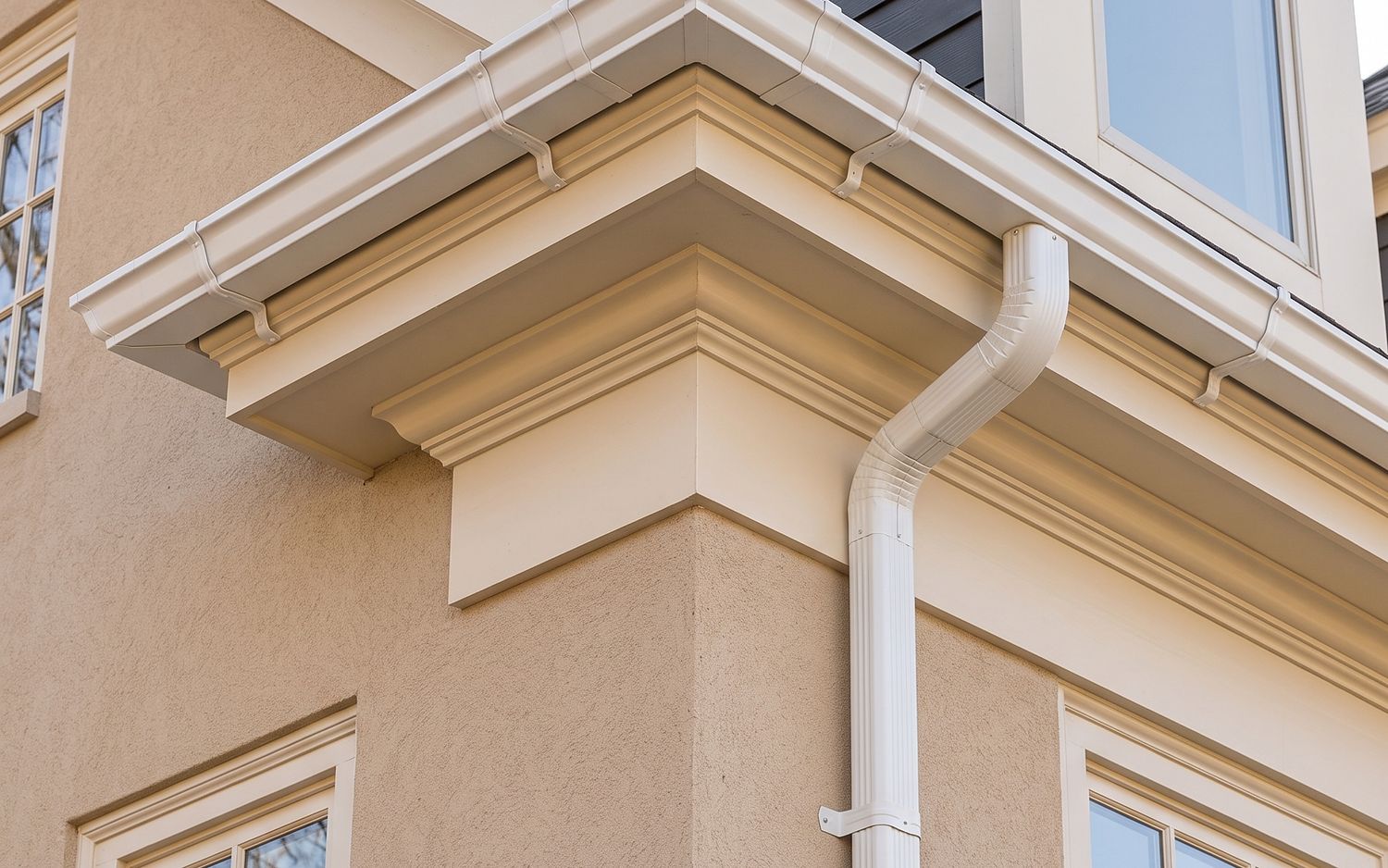
The flat-backed, ogee-fronted gutter on almost every house built in the last sixty years. We run it seamless from a coil on site, so the only joints on your whole house are at the corners and the outlets.

Roughly 5,500 sq in of roof per downspoutCapacity

Best forThe default for most Philadelphia homes.

Strengths

  • Seamless — no mid-run joints to open up
  • Holds more water than a half-round of the same width
  • Flat back screws tight to the fascia
  • Every colour, and it never needs painting

Trade-offs

  • The ogee shape catches debris in the corners
  • Aluminum dents — a ladder leaned on the front edge leaves a mark

What MG doesOur standard install, on hidden hangers screwed into solid wood.
Six-inch K-style seamless gutter with an oversized downspout outlet Oversized $$$$

6″ K-Style Seamless

Oversized K · commercial-size residential

The same profile, one size up, and usually paired with a 3×4 downspout instead of the standard 2×3. If your gutters overshoot in a hard summer storm, this is very often the actual answer rather than another cleaning.

Around 40% more water than a 5″Capacity

Best forBig or steep roof planes, long runs, valleys that dump into one spot, heavy tree cover.

Strengths

  • Substantially more capacity
  • Larger outlets clog far less readily
  • Handles a valley dumping into it without overshooting

Trade-offs

  • Costs more per foot
  • Physically bigger — noticeable on a small house

What MG doesWe size the gutter to your roof on the estimate rather than defaulting to 5″ everywhere.

Traditional $$$$ Drawn specimen

Half-Round

U-profile · the traditional gutter

A true semicircular trough hung on brackets or straps, and the profile that belongs on older architecture. The round bottom is why it self-cleans better than anything else — there is no inside corner for debris to pack into.

Less than K-style at the same widthCapacity

Best forVictorians, stone twins, historic blocks, and anywhere a modern ogee gutter would look wrong.

Strengths

  • Correct look on a period house
  • Smooth bore sheds debris and dries out
  • Available in copper and heavy aluminum

Trade-offs

  • Less capacity than K-style at the same nominal size
  • Costs more, in material and in labour
  • Bracket hanging is fussier work

What MG doesYes, where the house calls for it.

A built-in box gutter lined and set into the roof edge behind the cornice Philadelphia special $$$$

Built-In & Box Gutters

Yankee gutters · standing gutters

A wooden trough built into the structure of the roof edge itself and lined with metal or membrane, rather than hung off the fascia. Older Philadelphia rows, twins and Victorians are full of them. When they fail they leak into the wall and the cornice rather than down the outside of the house, so they go unnoticed for years and do a great deal of quiet damage.

Very high — they are large troughsCapacity

Best forYou do not choose these. Your house came with them.

Strengths

  • Enormous capacity
  • Invisible from the street — the cornice line stays clean
  • A sound trough can be relined rather than rebuilt

Trade-offs

  • Failures leak inward, into wall, cornice and joist ends
  • Debris sits in them
  • Relining is skilled work, not a gutter-truck job

What MG doesWe reline and repair them. If your cornice is staining or your top-floor wall is damp with no obvious roof leak, this is the first place we look.

Solid copper gutter with soldered joints, weathering toward bronze Premium $$$$

Copper Gutters

Half-round or K in copper

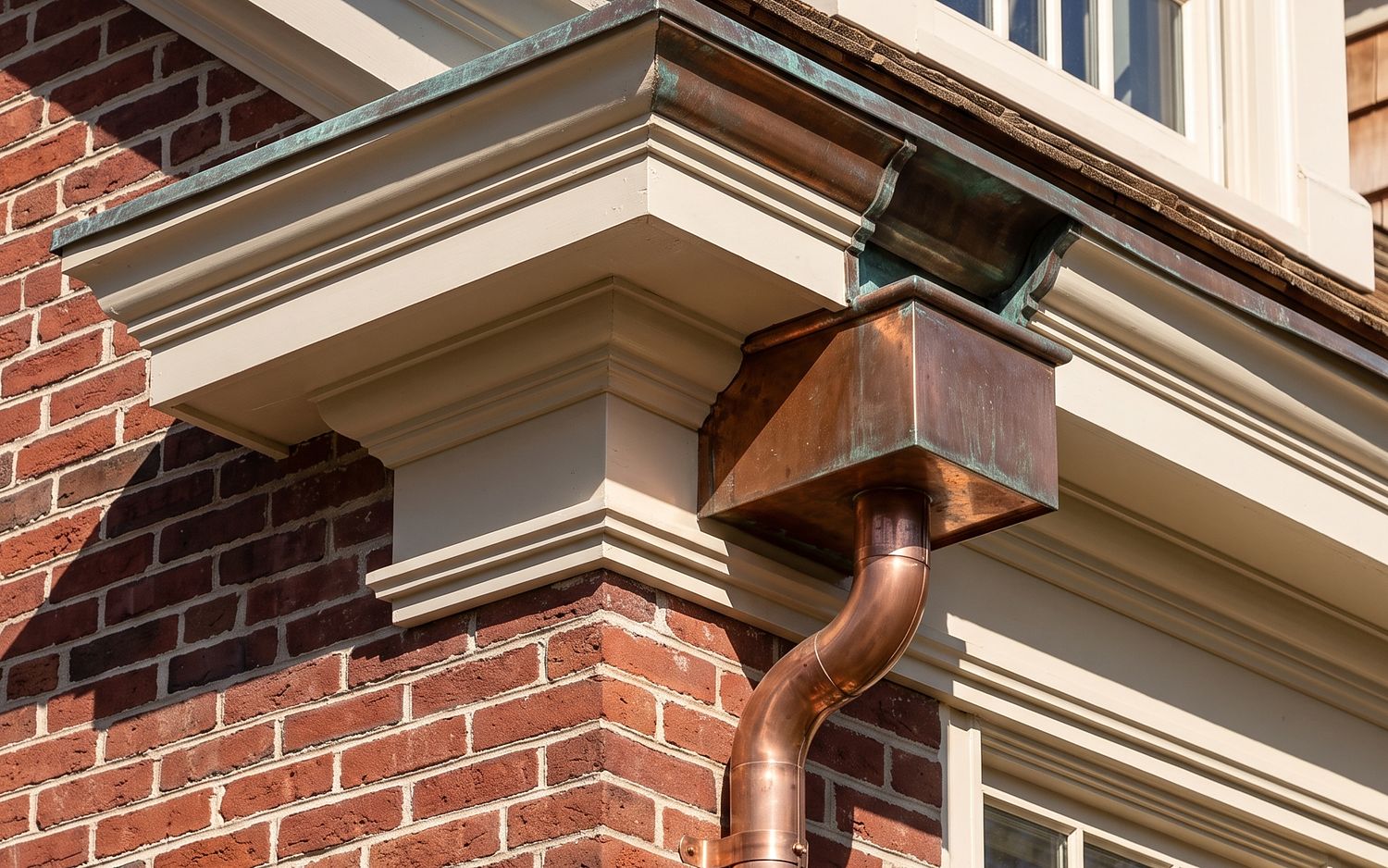
The same shapes in solid copper, which starts bright, weathers to bronze and settles into green patina over years. It is a lifetime gutter and it is priced like one.

Same as the profile it is formed inCapacity

Best forHistoric and high-end homes, and accent runs over an entry or a bay.

Strengths

  • Outlives the house it is on
  • Never needs painting
  • Soldered joints, not sealed ones
  • The patina is the point

Trade-offs

  • By far the most expensive option
  • Theft is a genuine consideration
  • Needs to be isolated from aluminum and steel or it corrodes them

What MG doesAvailable. Expect a real number and a proper conversation about it first.

Snap-together sectional vinyl gutter, joints visible along the run We rarely recommend $$$$

Sectional Vinyl

Snap-together PVC gutter

Snap-together plastic sections sold by the length. It is the cheapest gutter on the shelf and it is the one we take down most often. Every joint is a future leak and UV eventually makes the plastic brittle.

Same profile, far weakerCapacity

Best forHonestly — a shed.

Strengths

  • Cheapest option
  • Will not rust or dent

Trade-offs

  • A joint every ten feet, and every joint eventually leaks
  • Goes brittle and cracks in cold after a few years
  • Sags between hangers under a full load of water
  • Limited colours and it fades

What MG doesWe will replace it for you. We would rather not install it, and we will say why.

A downspout and extension carrying water away from the foundation Half the system $$$$

Downspouts & Extensions

Leaders · 2×3 and 3×4

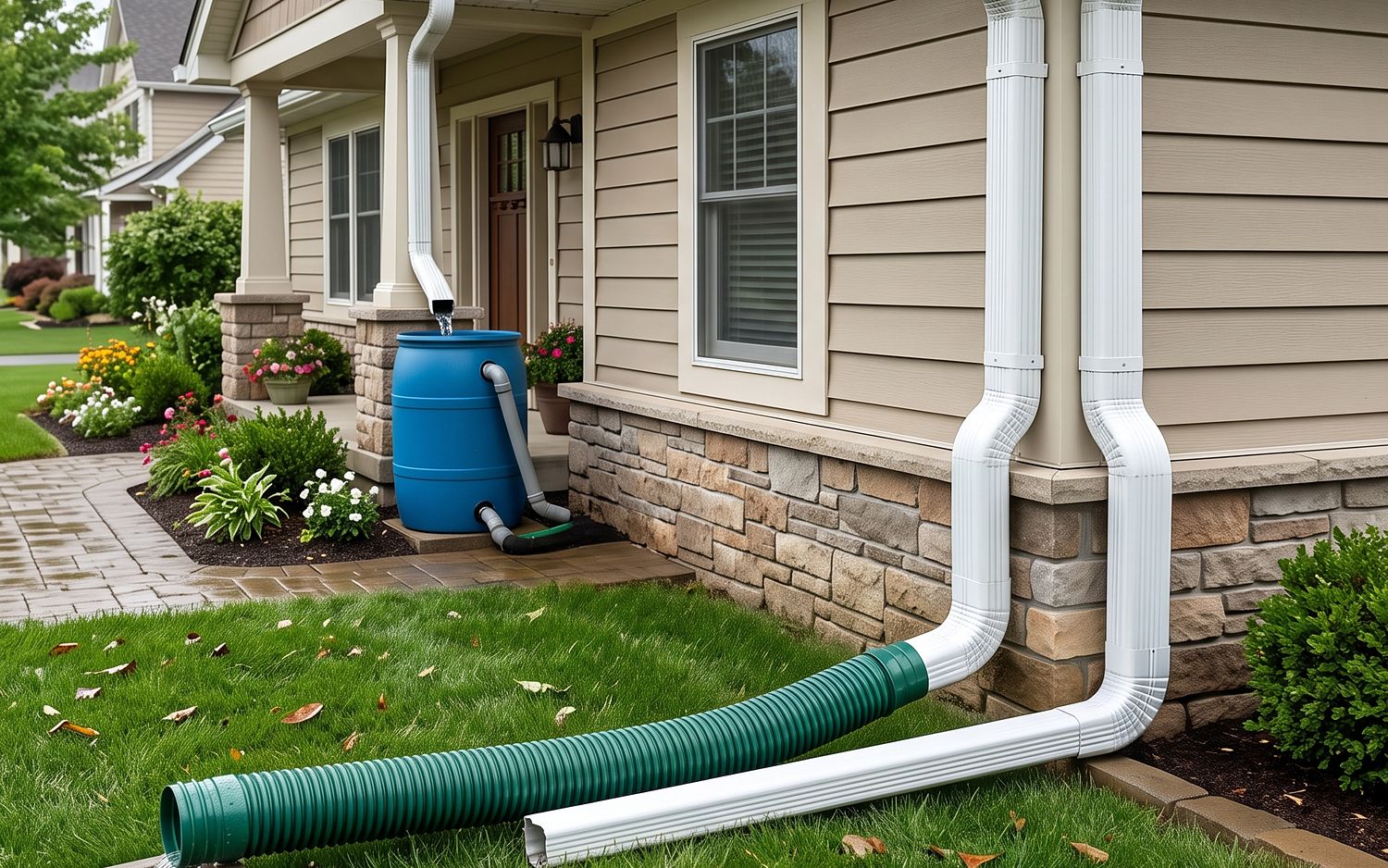
The gutter only collects. The downspout is what actually moves the water, and it is the half of the system nobody thinks about until it backs up. Standard is 2×3; upsizing to 3×4 roughly doubles the flow and clogs far less.

3×4 moves roughly twice what a 2×3 doesCapacity

Best forEvery house — and more of them than most houses have.

Strengths

  • Upsizing is cheap and makes an immediate difference
  • More outlets beats a bigger gutter almost every time
  • Extensions and tie-ins get the water away from the foundation

Trade-offs

  • Underground tie-ins can be blocked and nobody knows until it backs up
  • Extensions get moved by mowers and never put back

What MG doesWe count outlets against roof area on the estimate, and we always ask where the water goes once it reaches the ground.

Micro-mesh gutter guard fitted over the gutter mouth under heavy tree cover Add-on $$$$

Gutter Guards & Leaf Protection

Micro-mesh · screens · covers

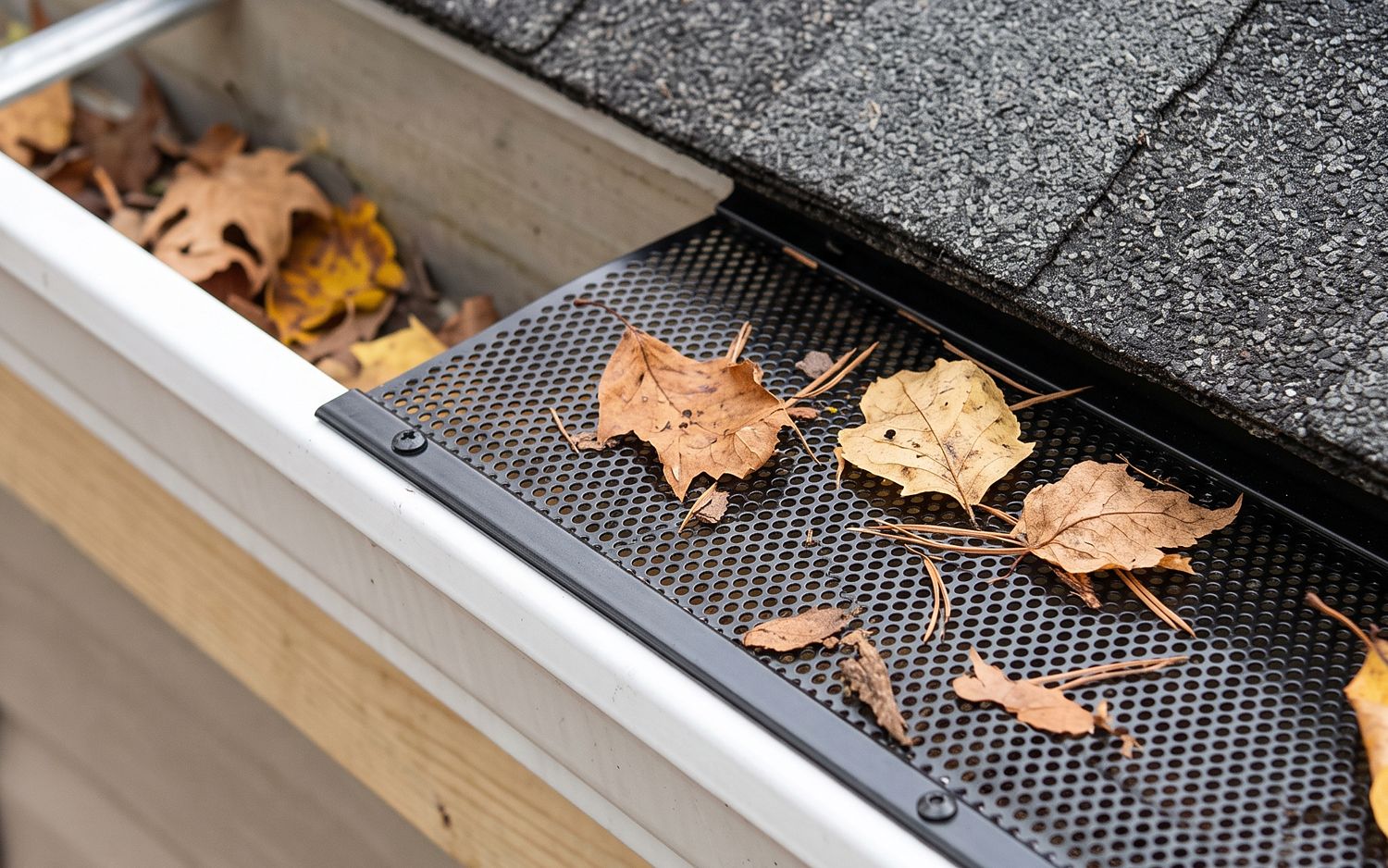
Screens, micro-mesh or solid covers over the gutter mouth to keep leaves out while letting water in. Under heavy tree cover they make a real difference. What they do not do is make a gutter maintenance-free, whatever the television advert says.

Reduces cleanouts, does not end themCapacity

Best forHouses under maples, oaks, sycamores and pines.

Strengths

  • Cuts cleanouts down dramatically
  • Keeps the big debris and nesting birds out
  • Micro-mesh handles even pine needles and seed pods

Trade-offs

  • Not maintenance-free — mesh still needs brushing off
  • Cheap screens pop out and end up in the yard
  • In an ice storm a covered gutter can freeze over solid
  • They do nothing for a gutter that is pitched wrong

What MG doesWe install them and we are straight about what they do. If your real problem is pitch or capacity, a guard will not fix it and we will not sell you one instead.

Still not sure?

We will come and
look at it, free.

Choosing a material off a page is guesswork. Choosing it after somebody has been on your roof, photographed what is there and told you what your house actually needs is not. That part costs nothing.

Philadelphia & suburbs · residential only

Free inspection & estimate

No obligation. Tell us what you are looking at and we will come and look at it.

Straight answers

Types of Gutters — FAQ

5″ K-style handles most Philadelphia houses. Go to 6″ with a 3×4 downspout when the roof is big or steep, when a valley dumps into one short run, or when your current gutters overshoot in a real storm even though they are clean.
Seamless, essentially always. We run the aluminum on site to your exact lengths, so the only joints on the whole house are at corners and outlets. Sectional vinyl has a joint every ten feet and every one of them is a future leak.
Look at your roof edge from across the street. If there is no gutter hanging off the fascia but the roof clearly drains somewhere, the trough is built into the roof edge behind the cornice. Very common on older Philadelphia rows, twins and Victorians.
They cut cleanouts down a great deal under heavy tree cover. They do not eliminate maintenance, and no honest contractor will tell you they do. And they will not fix a gutter that is pitched wrong or sized too small.

Free estimate

Free inspection. Written estimate. No pressure.

Tell us what you are looking at and we will come and look at it — and we will tell you honestly what it needs, including the times the answer is nothing yet.

(215) 303-0319