Every summer we get the same call. The gutters were cleaned in the spring, there is not a leaf in them, and in the first serious thunderstorm water still comes over the front edge in a sheet. The homeowner assumes they need cleaning again. Usually they need sizing.
The mistake almost everybody makes
Gutters get sized against the house. A modest house gets modest gutters, a big house gets big ones, and 5″ goes on almost everything by default because that is what is on the truck.
But a gutter does not collect the house. It collects the roof plane that drains into it, and those two things can be wildly different. A small house with a steep roof and a valley dumping into one corner can deliver more water to one length of gutter than a much larger house with four shallow planes and eight downspouts.
The question is never “how big is the house”. It is “how much roof drains into this specific run, and where does it leave”.
Three things that decide it, and only one is size
Roof area per downspout
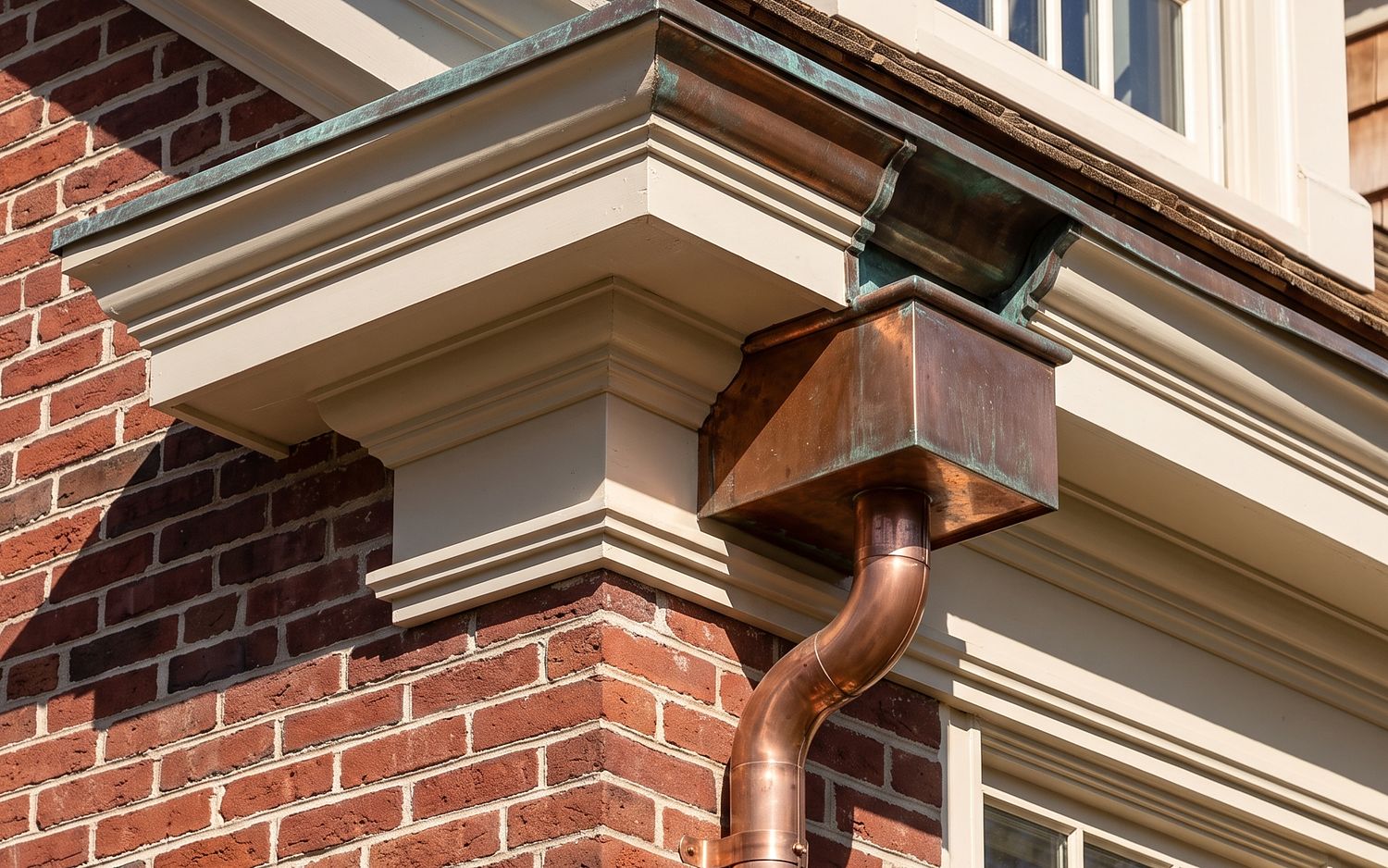
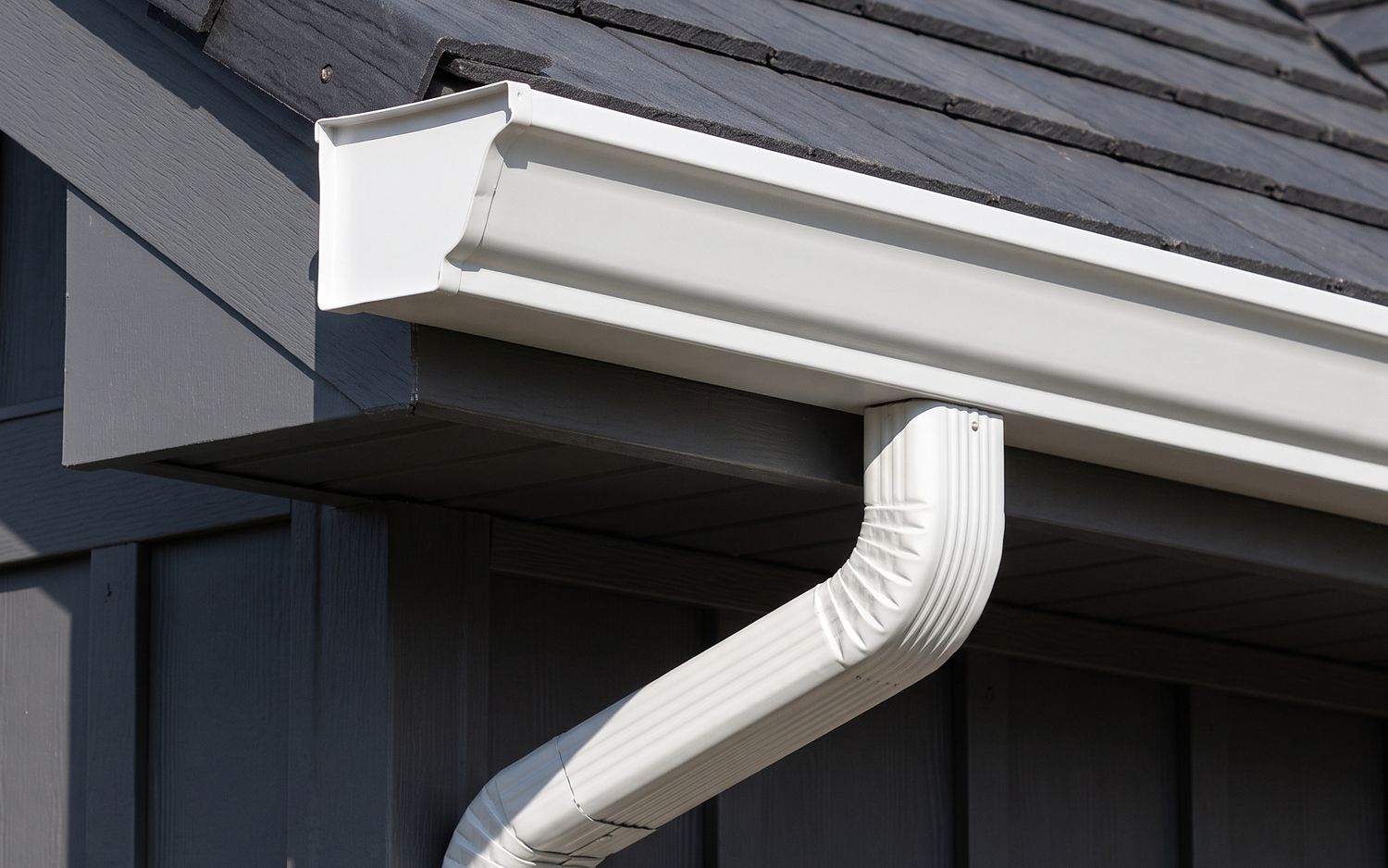
This is the real number. A 5″ K-style with a standard 2×3 outlet handles roughly 5,500 square inches of roof per downspout in ordinary rain. Move to 6″ with a 3×4 and you gain about 40% more capacity in the trough — and roughly double the flow through the outlet.
Pitch, which is not about volume at all
The steeper the roof, the faster water arrives at the edge and the more of it wants to carry straight past the gutter rather than fall into it. This is why a steep roof in Roxborough or Mount Airy overshoots at volumes a shallow ranch roof in Bensalem would handle without noticing. On a genuinely steep plane the answer is sometimes a gutter apron or a different hanging height, not a bigger trough.
Valleys, which concentrate everything
A valley takes two roof planes and funnels them into one point. Whatever length of gutter sits under that point is taking a hugely disproportionate share of the water, and it will overshoot there and nowhere else. If your overflow happens in one specific spot every time, look up — there is almost certainly a valley above it.
So when is 6″ actually worth it?
- Large or steep roof planes draining into a single run
- Long runs with only one outlet at the end
- A valley dumping into the gutter
- Heavy tree cover, where the extra width buys tolerance for the debris that gets past the guards
- Any run that currently overshoots when it is demonstrably clean
And when is it not? On a small house with modest, shallow roof planes, 6″ gutter is physically bigger, noticeably so from the street, costs more per foot, and solves a problem you do not have.
The other things that cause overshoot
Before anybody sells you new gutters, these are worth ruling out, because all four are cheaper to fix:
- Pitch. A gutter needs a slight consistent fall toward the outlet. Sagged hangers or a run that was hung level will pool in the middle and overflow there.
- Hanger spacing and fixing. Hangers into rotten fascia pull out slowly. A full gutter is heavy, and a sagging run behaves like a badly pitched one.
- The outlet itself. Undersized, or partly blocked at the top of the downspout where nobody looks.
- Where the water goes at ground level. An underground tie-in that is blocked will back a system up from the bottom, and nobody knows until it surfaces.
Gutter guards are not the answer to this
Guards are genuinely useful under heavy tree cover — they cut cleanouts down a great deal and keep the big debris and nesting birds out. What they do not do is add capacity. If your gutter overshoots because too much roof drains into too small an outlet, a guard changes nothing, and in a hard rain a covered gutter can shed water over the front just as readily.
We will install them and we are straight about what they do. If your real problem is pitch or capacity, a guard will not fix it and we will not sell you one instead.
What we do on the estimate
We count outlets against roof area rather than defaulting to 5″ everywhere, we look at where the valleys land, and we ask where the water goes once it reaches the ground — which is the half of the system most quotes never mention. Quite often the answer is not new gutters at all. It is one more downspout in the right place.