Most of Philadelphia lives under a flat roof, and most people only find out what is on theirs when it starts leaking. There are four realistic options for a low-slope city roof, they cost wildly different amounts, and choosing between them is much simpler than it looks once you ask the questions in the right order.
First question, and it decides everything: is the insulation wet?
Every coating on this page is a surface treatment. It goes over what is already there. That works beautifully over a roof that is structurally sound and dry, and it is a catastrophe over one that is not, because you have just sealed the water in with nowhere to go.
A coating over wet insulation does not fix a roof. It buys the water somewhere to hide while it keeps working on the deck underneath.
So before anybody talks to you about products, somebody has to establish whether the layers under the surface are dry. If they are not, the conversation is about replacement, and no coating price on earth is relevant.
Option 1 — Granulated cap sheet (modified bitumen)
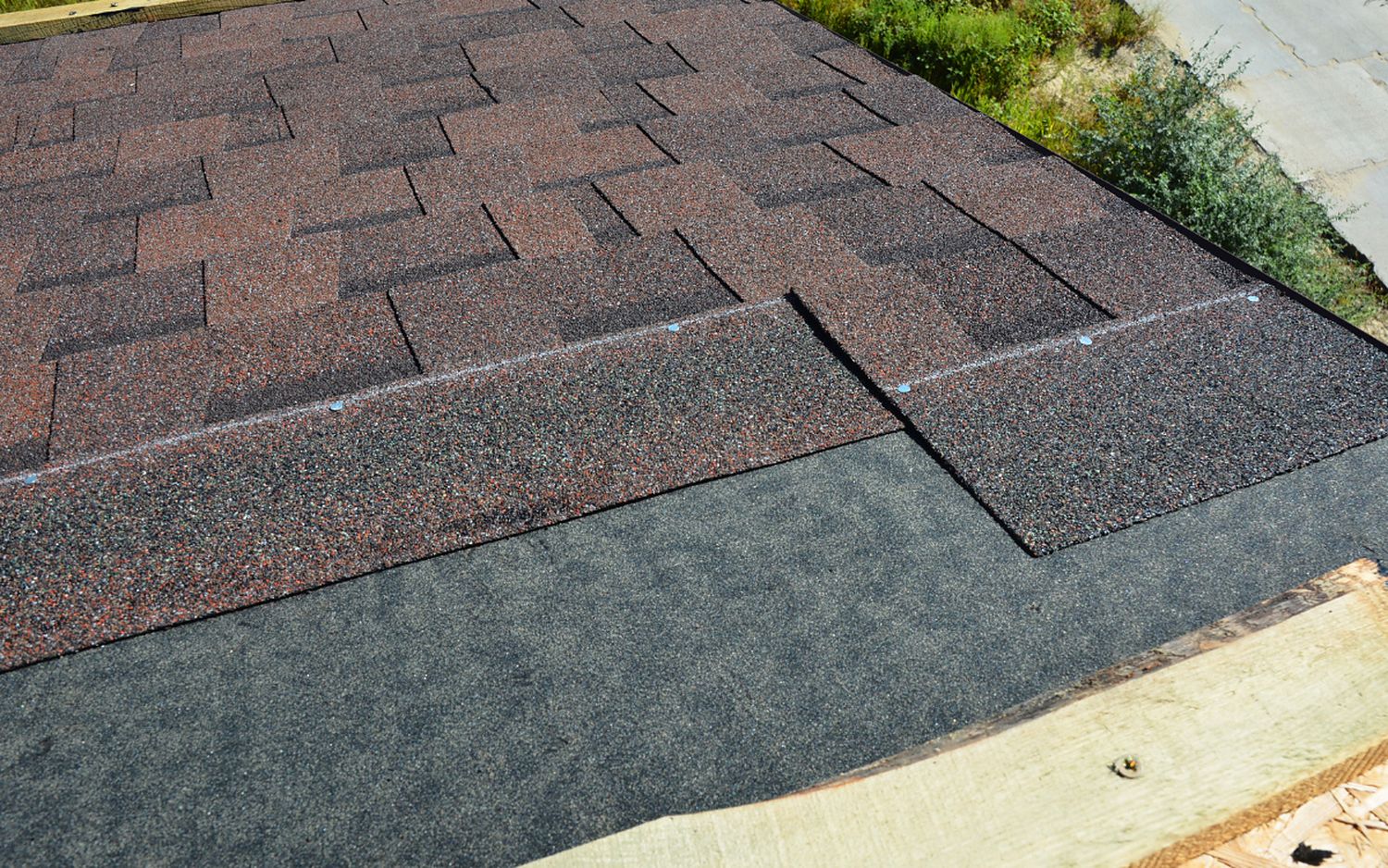
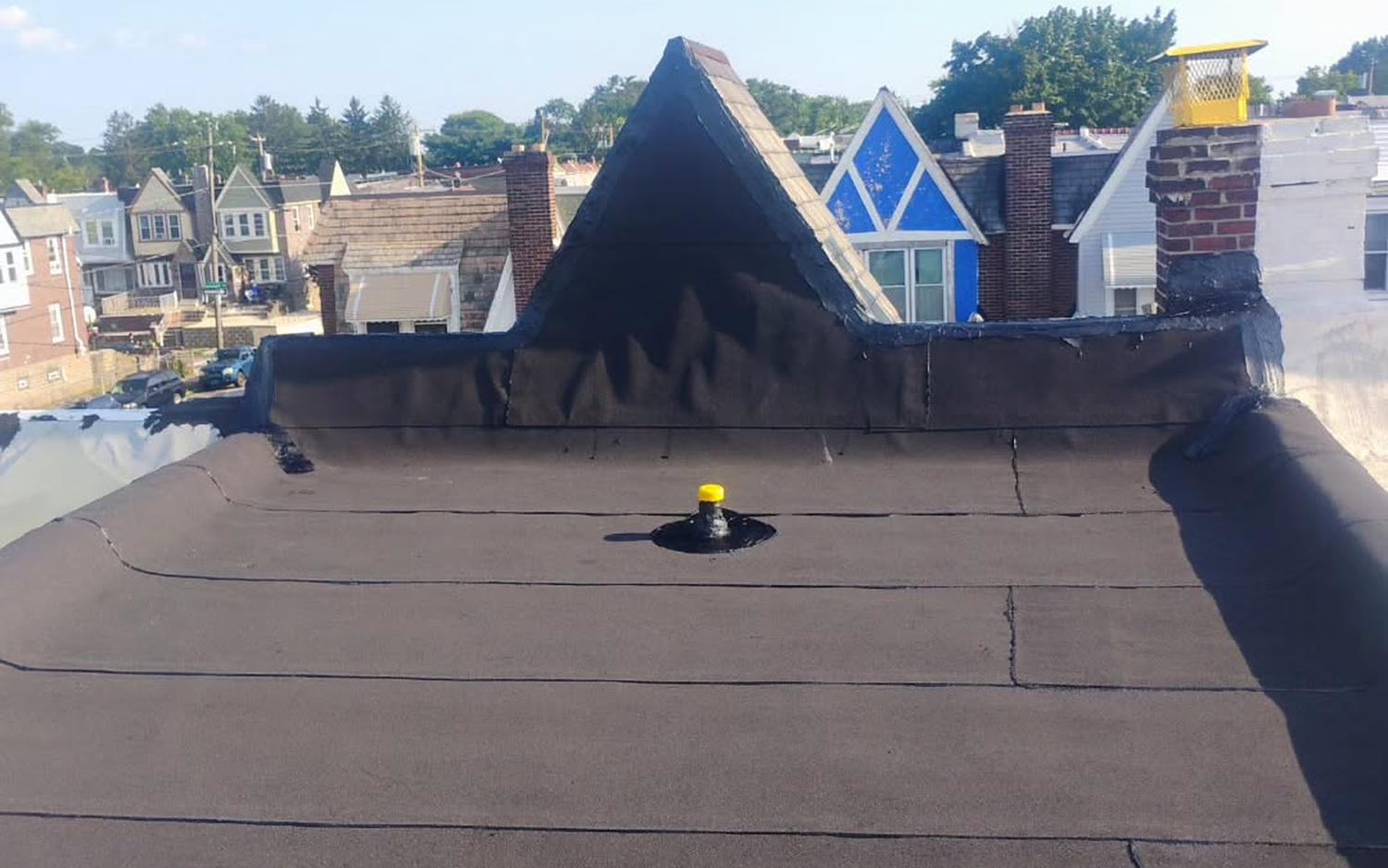
This is the standard flat roof on a Philadelphia row home and it is what we put back on when a flat roof genuinely has to be replaced. Asphalt reinforced with a polymer, rolled out in laps, with a base sheet underneath and a granule-surfaced cap sheet on top. The granule is the same material as on a shingle and it does the same job: it is the sun protection for the asphalt.
- Roughly: 15–25 years
- Relative cost: the most expensive of the four, because it is a full replacement rather than a treatment
- Best for: a roof that is at the end of its life, or one where the layers underneath are wet and have to come off
It is tough underfoot, it takes ladders and service traffic, and there is real redundancy in it because it is more than one layer. It does not need coating to survive — the granules already do that. What eventually goes is the laps and the flashing terminations, which is exactly where a competent installer spends their time.
Option 2 — Black & silver (aluminium-fibered coating)
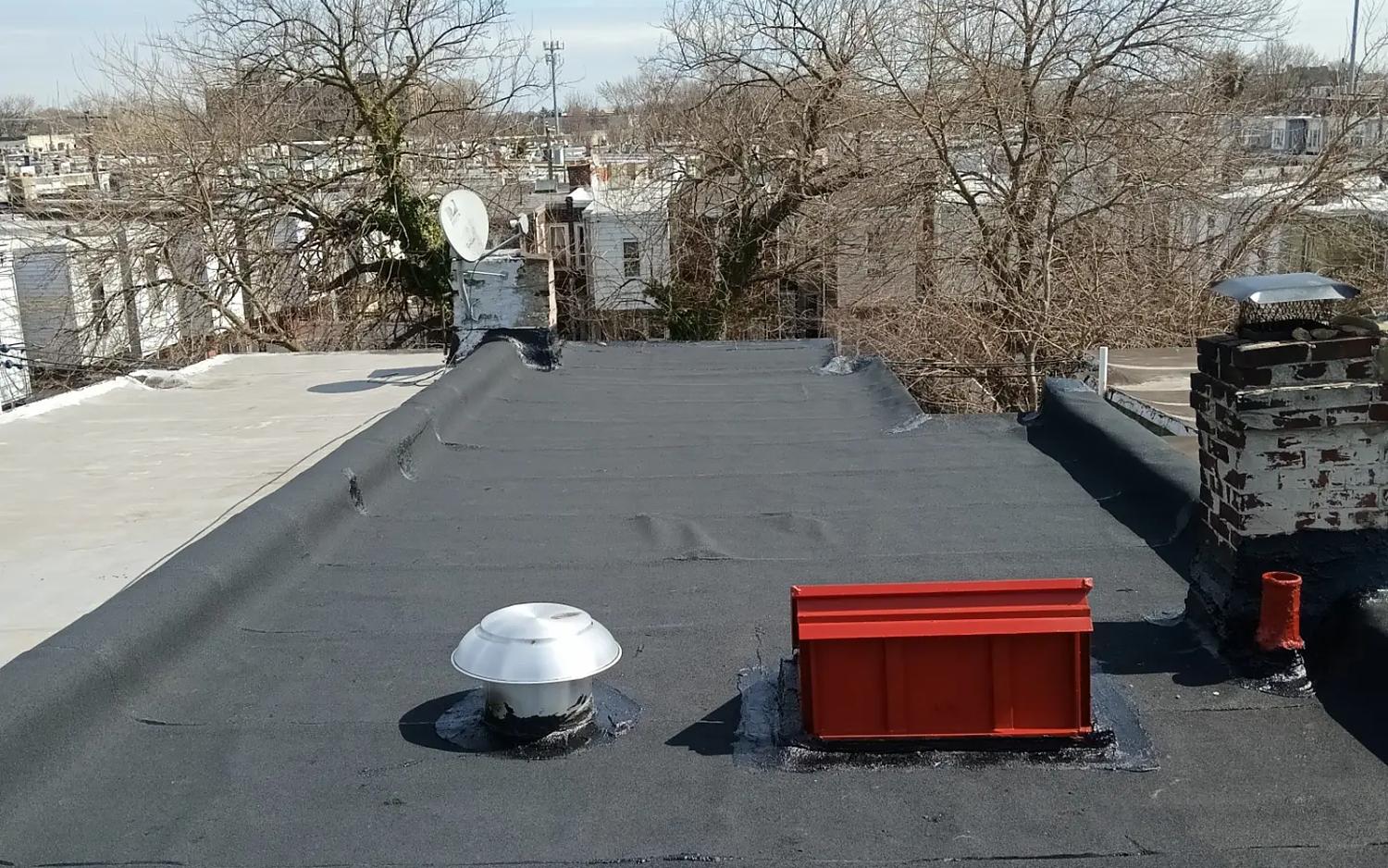
The two-coat maintenance system that has kept this city's row-home roofs alive for decades, and the cheapest thing you can do to a flat roof that genuinely extends its life. A black fibered asphalt base coat goes down first — that is the waterproofing layer, and it soaks into the laps and seams. A silver aluminium-fibered top coat goes over it, and the aluminium flake reflects the sun off the black asphalt so it stops cooking.
- Roughly: 3–5 years per coat, then recoat
- Relative cost: the cheapest option by a distance
- Best for: a sound roof that is drying out at the surface, and the regular upkeep cycle on a roof that is not ready to be replaced
The catch is in the name: it is maintenance. It seals surface cracks, open laps and tired flashing terminations, it drops the temperature noticeably on a top floor, and the clock resets every time you renew the silver. It does not fix wet insulation and it is not a new roof, and nobody should sell it to you as one.
Option 3 — Silicone coating
The heavy end of coating work. A liquid silicone membrane rolled or sprayed over an existing flat roof to make a seamless, reflective skin with no joints in it at all. Several times the life of a silver coat and several times the price.
- Roughly: 10–20 years, renewable
- Relative cost: well above black & silver, well below a replacement
- Best for: a structurally sound, dry roof with intact insulation that is getting tired at the seams and is not ready to come off
Silicone holds up to standing water in a way asphalt coatings do not, which matters on a roof that ponds. It needs a properly prepared surface or it peels, and it is slippery when wet, which is worth knowing on a roof people actually walk on. Over the right roof it buys you years for a fraction of a replacement. Over the wrong roof it is money set on fire.
Option 4 — Rubber membrane (EPDM)
A single-ply rubber sheet, laid in large pieces so there are very few seams. We use it where it suits the roof — it goes round skylights, curbs and vents cleanly, and it is quick to lay on a large open plane. Like cap sheet it is a replacement rather than a treatment, so the same question about wet insulation applies before anybody prices it.
How to choose, in three steps
- Establish whether the insulation is dry. Wet means replacement. This is not a preference, it is a fact about your roof.
- If it is dry, ask how many years you want to buy. Three to five, and black & silver is almost certainly the right answer. Ten to twenty, and silicone is worth pricing.
- If it is coming off anyway, ask what is going back on. Cap sheet is our default for a row home. Rubber where the roof suits it.
The thing we will tell you that costs us the sale
We check for saturation before we ever quote a coating. If your insulation is wet we will tell you it needs to come off, even though the coating would have been the easier sale and the smaller number on the page. A coating over a wet roof looks finished for about two years and then you are paying for the replacement anyway, plus the coating.
And if the roof is fine, we will say that too. The inspection is free and it ends with photographs of your own roof, whichever way it goes.