The hours after a storm are when people make the decisions they regret. There is water coming in, the phone is ringing with contractors who somehow already know your address, and the pressure to just get someone — anyone — onto the roof is enormous.
Here is the order that protects both your house and your claim.
1. Stop the water, safely
Getting the water under control comes first, but not at the cost of somebody getting hurt. Nobody should be on a wet or storm-damaged roof, in the dark, or in wind. Not you, and not a contractor either.
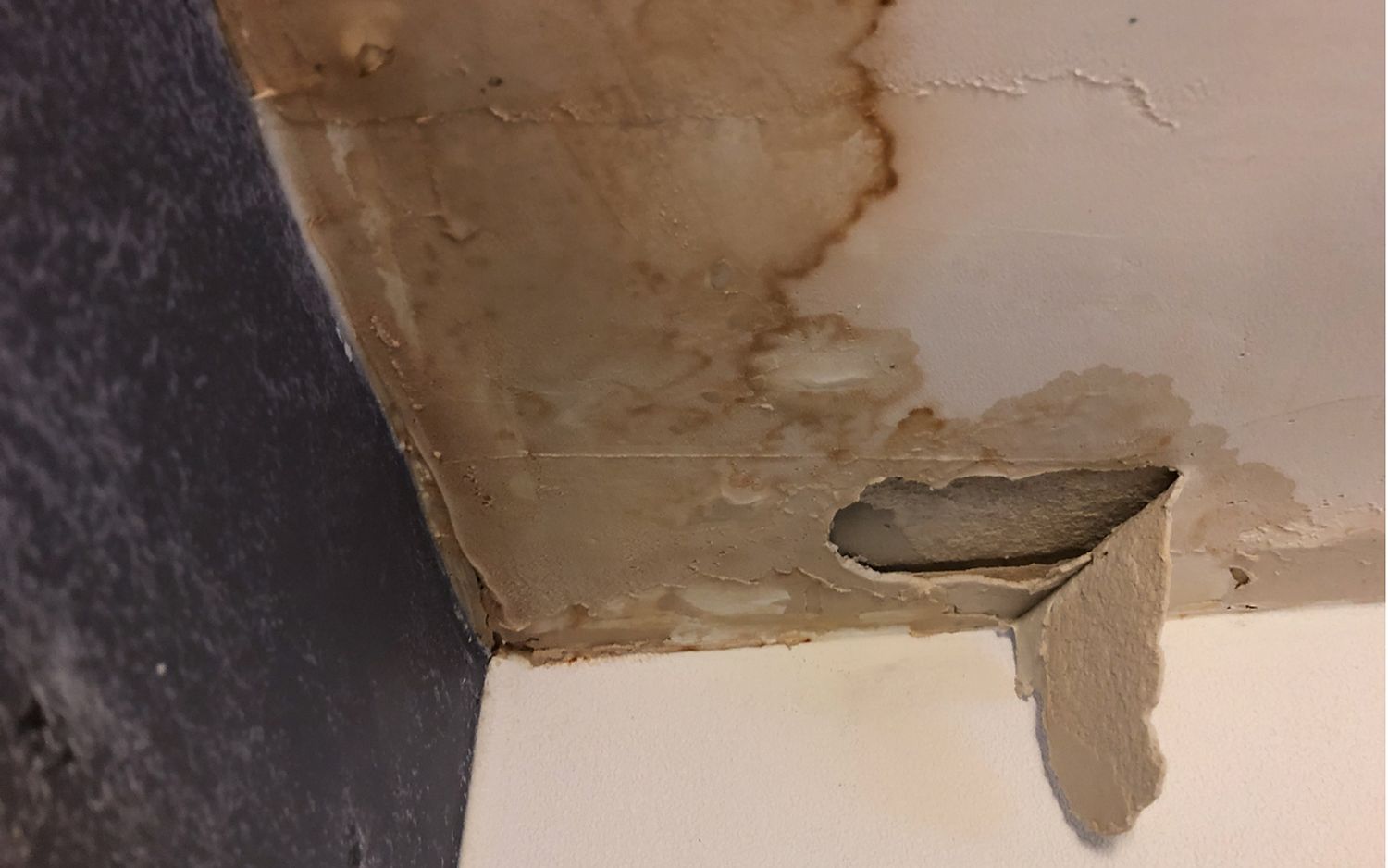
Inside, move what you can out of the way, get a container under the drip, and if a ceiling is bulging with trapped water, pierce it deliberately at the low point with something long so it drains in one place instead of bringing the whole ceiling down. Turn off electricity to any circuit water is getting near.
2. Photograph everything, before anyone touches it
This is the step people skip and the one that costs them most. Your insurer is assessing damage that will have been tarped, dried out or partly repaired by the time an adjuster arrives. Photographs taken before any of that happened are the only record of what it actually looked like.
- Wide shots of the house from several angles, so the damage is in context
- Close-ups of every damaged area you can capture safely from the ground
- Every affected room inside — ceilings, walls, floors
- Damaged contents, individually
- Anything the storm brought down: branches, debris, sections of somebody else's roof
- The date on your phone's photos is doing quiet work here. Do not crop it out.
3. Call your insurance carrier — not a contractor first
Report the claim yourself, directly, and write down the claim number, the name of who you spoke to and the date. Ask two specific questions: what your deductible is on this claim, and whether your policy pays replacement cost or actual cash value. Those two answers determine most of what happens next, and a surprising number of people find out the difference at the worst possible moment.
Ask when an adjuster will attend, and try to be there when they do.
4. Get a written, itemised scope — from someone who is not in a hurry
A real scope of works lists what is damaged, what is being replaced, and what it costs, line by line. It is the document that lets you compare one contractor to another and lets you hold the finished job against what was promised.
Be wary of anybody who will not put it in writing, who needs a decision today, or whose price moves depending on what your deductible is. A quote that changes when you mention your excess is not a quote.
5. Do not sign over your claim
This is the one to read twice. After every significant storm, people go door to door with an assignment of benefits — a form that transfers your right to your insurance payout directly to the contractor. Sometimes it is presented as an “authorisation to inspect” or a “work authorisation”.
Once you have signed your claim over, you are no longer the customer. The contractor negotiates with your insurer, over your roof, and you have very little say in what gets done or what it costs.
You never have to sign one to get a roof repaired. If somebody puts a form in front of you in a driveway and cannot explain plainly what it does, that is your answer. Read anything before you sign it, and be particularly careful about documents that mention your policy or your carrier at all.
A few other things worth knowing
- Keep every receipt for anything you buy dealing with the emergency — tarps, a dehumidifier, a hotel night. Most policies cover reasonable emergency spend.
- Do not throw damaged material away until the adjuster has seen it, or you have photographed it properly.
- Storm damage is not always obvious. Hail in particular bruises a shingle without breaking it, and the failure shows up months later.
- You choose the contractor, not your insurer. A recommendation from them is a recommendation, not an instruction.
What we do on a storm call
We answer the phone around the clock, we tarp the same day where it is safe to, and we document the damage properly for your claim — photographs, a written scope, and the detail an adjuster actually needs rather than a number on a page. Then you decide, with the paperwork in your hand, in daylight.